
Poems to heal a broken heart: accept, forgive and start over
When your heart breaks, the first thing to go wrong is your rhythm : sleeping, eating, answering messages. A poem helps you find your rhythm again. It doesn't deny the pain, it names it until it loses the habit of commanding. I'm Steve the Poet . I've read these verses in small rooms where the silence was heavy; I learned that healing isn't erasing, it's making room for what comes next. Read slowly; if your voice trembles, let it. It's a sign of life.

If your love never truly began, this reading connects with Poems for Letting Go of Unrequited Love . And if, after completing this first section, you need a roadmap, we'll later explore Poems for Closing Romantic Cycles.
When pain takes over: soothing poems for the first week
Before the verses, three simple recommendations:
- Breathe for sense: every 3–4 lines, pause.
- Don't explain the poem when you finish. Leave a second of gentle silence.
- Place a small object next to you (a glass of water, a key). Repeat the reading while looking at that object. The body understands before the mind.
Steve the Poet: On stage I saw that the first relief comes when we change the objective: it is not to stop feeling, it is to better endure what we feel.
1) Breathe slowly
I will do nothing heroic today.
I will put water on to boil,
I'll listen to see if the boiling is from the water or from my chest.
I will speak softly to him, calling my name.
like someone calming a child who has just fallen.
If tears come, I feel them by my side;
I won't close the door on him,
But I won't give him my bed either.
I'm going to stay here,
on the warm edge of day,
breathing until the pain
Learn to breathe with me.
2) What I keep clean
I'm not going to argue with memory.
I'll make a box with your laughter and our Tuesdays,
another one with the things we didn't know how to say.
I close both with the same tape
and I put them on a shelf that doesn't open by itself.
I will sweep the room without anger,
how to sweep after a party.
Not through forgetfulness: because hygiene of the soul.
3) I'm not taking you with me
Today I will walk without your shadow.
If the street corner asks for you,
I'll tell him you're continuing on your route.
I won't haunt myself with whys;
I will keep myself company with water and sun.
Sadness will come at a trot,
But I'm going at a human pace.
He who arrives home tired
He arrived too.
If you need support for this gesture, you can use Poems of Inner Strength and Resilience.
4) Salt hours
There are afternoons that feel like closed oceans.
I'm not going to swim them all today.
I will stay on the shore of just one,
I'll wash fruit, I'll call a friend,
I will learn to fold a large sheet without arguing.
That's what life is also:
small, quiet victories
that salt does not see coming.
5) Instructions for the first Monday
Get up when the sun calls your name.
Choose a mug that loves you.
Don't chase after what's gone;
draw the curtains.
Put on a song that lifts your spirits
and leaves the bed made as a promise.
The world will know how to wait.
You are what's urgent.
6) To dwell in my name
I'll try my name without yours next to it,
like someone looking at themselves in new clothes.
If it's too big for me,
I will roll up my sleeves;
If it fits me perfectly,
I will breathe slowly so as not to break it.
I'll greet myself in the mirror
And I will make peace with my voice.
From today,
My job is to bring myself back.
7) Domestic Kintsugi
I won't cover the crack with paint.
I will run gold along the edge
to remember where I chose to heal myself.
Brilliance is not vanity:
It's a map.
The day I forget,
I will follow the golden line
to the center that takes care of me.
Steve the Poet: The audience breathes differently when that word appears: repair . It's not about going back to how it was; it's about returning with wisdom.
8) Goodbye with a glass of water
I will give your name to a glass of water
and I'll put it on the windowsill.
When it evaporates,
You didn't leave, did you?
I will have been left behind.
I will close the window carefully,
as if to say, "that's enough"
without raising their voices.
If you're looking for a more ceremonial ending, you'll want to read on. Poems to close love cycles.
If, on the other hand, some clarity emerges, save it for later. Poems to start over with hope.
Naming rage and guilt: poems that They order the noise

Before it can heal, emotion needs form . Unchanneled rage lashes out; guilt without light shrinks. These poems don't deny either: they give them shape so you can breathe more easily. Read them by marking the rhythm (rage) or by opening up the final image (guilt). Keep water and a sheet of paper handy: if a line shakes you, write down what it touched you about; that's already part of the healing process.
Steve the Poet: On stage I learned that when verse gives rhythm to rage and light to guilt, the body slows down. It's not magic: it's breathing with words.
1) Hand brake
My fury flared up on the curve,
But I reached the handbrake.
I didn't crash into your name:
I parked on the side of the road and turned off the radio.
The engine was still hot,
me too.
I opened the window and counted the posts:
one two three.
When the air entered,
I understood: driving is not racing,
es arrive alive at home.
2) The conversation I didn't have
In my head I told you everything:
how it hurt, what I expected, why I kept silent.
Then I turned down the volume of your voice
and I left mine in the middle of the afternoon.
Not to win the argument,
to listen finally What was I hungry for?
It wasn't justice.
It was taken care of.
3) Chemicals
Rage makes bubbles in the blood,
Guilt bursts them with its fingers.
I stare at the glass for a whole minute
without moving it.
Chemistry changes
when the gaze does not push.
I am learning to be my own laboratory:
I observe without getting hurt.
If you need emotional muscle to sustain this gesture, breathe later in Poems of Inner Strength and Resilience.
4) Tightrope
There hangs a string between “there would be” and “I should have”.
I'm walking in today's sneakers,
not with boots from the past.
If I lose my balance,
I didn't insult myself:
I put the stick closer to the ground
And I try again.
The circus is over;
this is daily life.
5) Letter to my rage
Stay, but without weapons.
If you're going to speak,
whatever it is takes care of me:
limit, dignity, truth.
If you come to set fires,
Go outside to cool off.
In here, only fire
that gives heat.
6) Gesture of absolution
I forgive myself for being late.
because they believed that loving meant enduring,
for explaining what was already beyond repair.
I forgive myself and, in that same sentence,
I appoint myself responsible for my house.
It's not a blur:
es point and followed.
7) New stem
Guilt cuts flowers and displays them.
The acceptance of plant stems
in a land that learns.
They are not visible at first,
But one day you look at yourself
and you are sprouting.
That's when you understand why it wasn't worth it.
keep scolding you.
8) Counter
I added: mistakes, silences, clumsiness.
I subtracted: what was not up to me.
I multiplied: the times I tried honestly.
I divided the weight between my two shoulders.
The result is not perfect,
but block:
Today I can walk without debt.
with my mirror.
9) A guide on how not to write to him
If the impulse arrives:
drink water,
Look out the window at three trees,
Write down one sentence for yourself:
“Today I’m staying on my side.”
If he comes back,
Walk for ten minutes without your phone.
y 4-4-6 breath.
If he insists,
Read me again.
Sometimes you don't win:
se delay.
For particularly gloomy days, find solace in Poems to Uplift You in Difficult Times . If you feel the pain has a spiritual component, Poems of Faith and Hope can offer you comfort.
Forgive me / Forgive you — poems for loosen the knot (without returning)

Forgiveness doesn't sign blank checks: it detaches . Forgiving myself means ceasing to speak to myself as an enemy; forgiving you means lifting a weight from my chest without giving you back the keys . These pieces are meant to be read in a low voice, with a brief pause at the end. If a line resonates with you, write it down; turning it into a bridge phrase for next week often helps.
Steve the Poet: I discovered that forgiveness begins with a humble phrase: “I didn’t know any better .” From there, your breathing returns to normal.
1) Act of forgiveness (for me)
I declare my clumsy steps innocent,
my untimely attempts,
my urgent way of asking for love.
I don't erase what happened:
lo I put to work in my favor.
I sign with this trembling hand
And I promise myself to be careful.
as a daily policy.
2) Own museum
I will not make a gallery of horrors out of my mistakes.
They will be sketches:
strokes where I learned the pulse of my hand.
If anyone asks why I don't close,
I'll tell him the museum is still open
but the curatorship changed:
Now I showcase what makes me feel good.
3) Letter to the person I was with you
I look at you with tenderness,
not with judgment.
I know why you stayed,
I know why you left late.
I will not use you as a scarecrow:
You will be my teacher.
Thank you for holding on as long as you could;
Now it's my turn to rest.
4) Forgiving you without coming back
I forgive you without opening the door.
I take you off my chest,
not from the file.
Good luck far from my wound.
If our paths ever cross,
I will carry peace in my pockets
y distance in the shoes.
5) Partial amnesty
I forgive you for what you didn't know,
not because of what you chose knowingly.
Forgiveness does not erase boundaries:
He paints them bright yellow
so that we can see them in time.
6) Emotional economy
I'm closing the books:
I will not charge you interest for what has not been delivered.
I will not blame myself for what I gave.
I learned a new system:
tell what Yes, it supports me..
The rest, archive.
7) Lock
I put your name on the lock
and turn only once.
Not to kick you out:
so I could stay.
I keep the key in a drawer.
that doesn't open in a hurry.
Breath.
Now my house has a gentle silence.
If you feel that this step requires a clearer ritual, later on you will find Poems to Close Love Cycles helpful.
8) Minimal gesture
I'm not going to write to you today.
Today I'm going to write to myself.
He'll say, "I'm arriving."
That's enough.
Micro-poems of forgiveness (for notes or WhatsApp)
- “I forgive myself for learning late; I learned.”
- “I release you without debt; I keep myself.”
- “Peace be with you; place for me."
- “Forgiveness is not returning: it is breathe. "
- “I close carefully, not loudly.”
- “Your story continues; so does mine.”
If you need muscle to sustain this gesture, take a breath in Poems of Inner Strength and Resilience.
Rebirth without haste: poems of hope for the dawning day
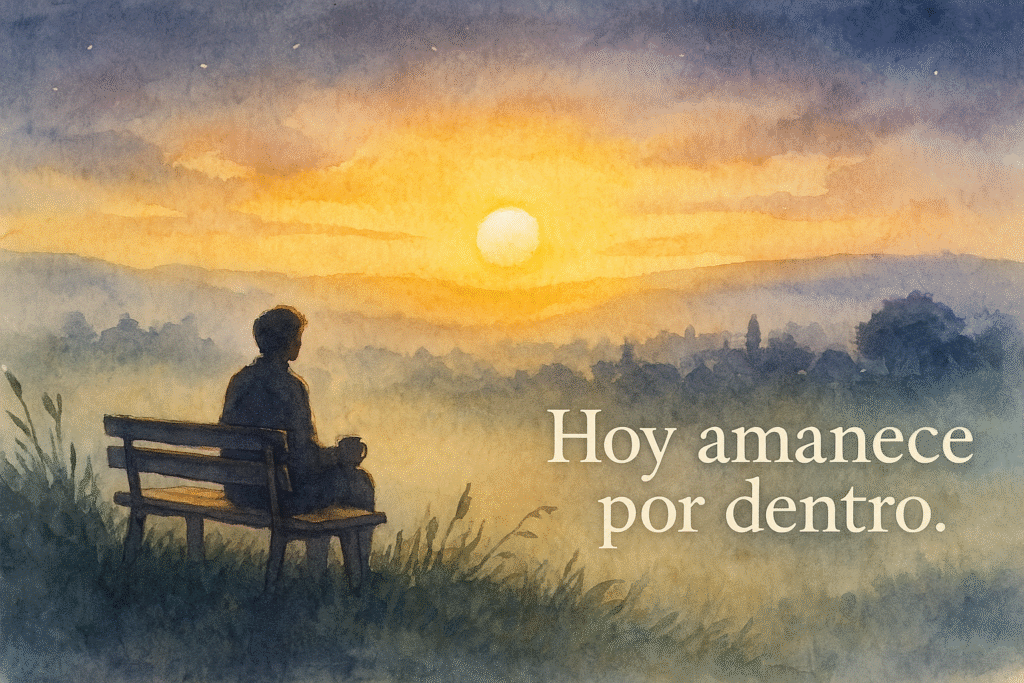
Hope isn't a trumpet: it's a pulse . It comes in small gestures that, repeated, make their way. If today you can only read four lines, that's fine. Tomorrow perhaps you can manage eight. Don't demand total enlightenment; it's enough to light up one corner.
Steve the Poet: In my readings, people breathe again when they discover that the future fits in a cup, a window, and ten minutes of sunshine. That's where rebirth begins.
If you'd like to find something more uplifting, this piece connects with Poems to Start Over with Hope . And when you want to share encouragement with someone close, later switch to Motivational Poems for a Friend.
1) Useful early morning
I don't ask the morning to save me:
I ask you to me accompany.
While the water sings in the kitchen,
I repeat my name like a key.
I open the door to the day carefully:
only bring in what I can carry.
2) Rehearsal of joy
I will not have a party; I will sound test.
A song that straightens your back,
three messages to people who make a difference,
two pages of a book that loves me.
If something sounds off, I lower the volume.
Joy learns through practice.
3) The bench in the sun
I found a bank where the city lowers its voice.
I sit down with my life and have a slow conversation.
We don't solve the world's problems;
We shared bread and a short list:
What it was,
what no longer,
what will come in human size.
4) Habitable garden
I don't want a jungle of miracles;
I want garden.
I will establish rest periods,
risks of caution,
stones to remind me to return.
If a flower takes a long time,
I don't blame her:
I'll stay and shadow him.
5) Return Manual
Step 1: Open the window.
Step 2: Ask the airwaves for good news.
Step 3: Tell it to me if necessary:
“I’m arriving today.”
The rest of the manual
It is written while walking.
6) Tomorrow's bread
I'm saving some dough for the next day:
small promises that ferment without noise.
If anyone asks me about my plan,
I will show you my hands:
Here's the flour,
Here's the weather,
here patience.
7) To look at you again (at me)
I looked at myself the way one looks at someone returning tired:
with a clean towel and a glass of water.
I don't ask myself difficult questions;
I let myself be.
When the pulse stabilizes,
I say to myself in a low voice:
“Thank you for not letting go of me.”
8) Good Treatment Log
I'll note one good thing from the day
even if it is microscopic:
a smell of bread,
a dog that doesn't know me and greets me,
a cloud shaped like a house.
Accumulation does its job:
Suddenly, I walk more lightly.
Micro-poems of rebirth (for statuses/notes)
- “I don’t run: I walk with light.”
- “Seed, not miracle: that’s how I bloom.”
- “Today I name myself without haste and I achieve.”
- “The future fits in a warm cup.”
- “Little by little is also getting there.”
- “I stay by my side and wake up.”
- “Hope doesn’t shout: it sets the rhythm.”
Practical micro-rituals (3–5 minutes)
1) 4-4-6 breathing with image
Inhale for 4, hold for 4, exhale for 6 while looking at a fixed point (cup, plant). On the last exhale, repeat: “I am arriving.”
2) Glass and window
Fill a glass with water, open the window, say a kind line to yourself (choose one of the micro-poems), and drink. Close the window slowly.
3) Light corridor
Walk around your house with your phone in airplane mode for 3 minutes. Touch three objects you're holding (book, photo, mug) and name them.
4) List 3-2-1
3 things you are grateful for today, 2 things you learned, 1 small gesture you will make for yourself tomorrow.
5) Bank Therapy
If you can, sit for five minutes on a bench in the sun. Observe without commenting. At the end, write a single line in your notebook: “Today I breathed here.”
6) A friendly end to the day
Turn off one light, leave another warm one on, fold a garment, prepare water for tomorrow. Let your room know you're still here.
When these practices have sustained you for a week straight, give yourself a simple reward: return to Poems to Start Over with Hope for a bright boost, or share encouragement with someone from Poems to Offer Courage in Difficult Times . If you still feel stuck, save Poems to Close Love Cycles for later.
Frequently asked questions (FAQ)
Yes. They provide language and rhythm : naming the pain reduces rumination and offers a safe framework for processing it. Use them like guided breathing: read slowly and close with an image.
Keep your texts short and end gently. Avoid reproaches and swearing. Repeat two or three times a day and allow for silence between verses.
Take an honest inventory: three successes, three lessons learned. Take responsibility for your part and let go of what was beyond your control. Practice a bridging phrase: “Today I take care of myself on time.”
Apply the 24-hour rule: if the urge comes, breathe 4-4-6, drink water, walk for ten minutes without your phone and write three lines: what I feel / what I need / what I will do in 24 hours.
Distinguish between forgiving and reconciling . Forgiveness lifts the burden and allows for healthy distance and clear boundaries.
When desire sounds like curiosity , not escape; when you can talk about what you've experienced without a lump in your throat and plan a week without checking its status.
Both. In intense moments, short and repeatable is best; when the tide goes out, you can explore longer pieces in blocks of meaning.
Closing
Healing is not forgetting: it is returning to yourself with renewed patience. I hope each verse has given you a small lamp and a glass of water. I—Steve the Poet—believe in coming home: in speaking your name without permission and in setting the table each day for the life that returns.
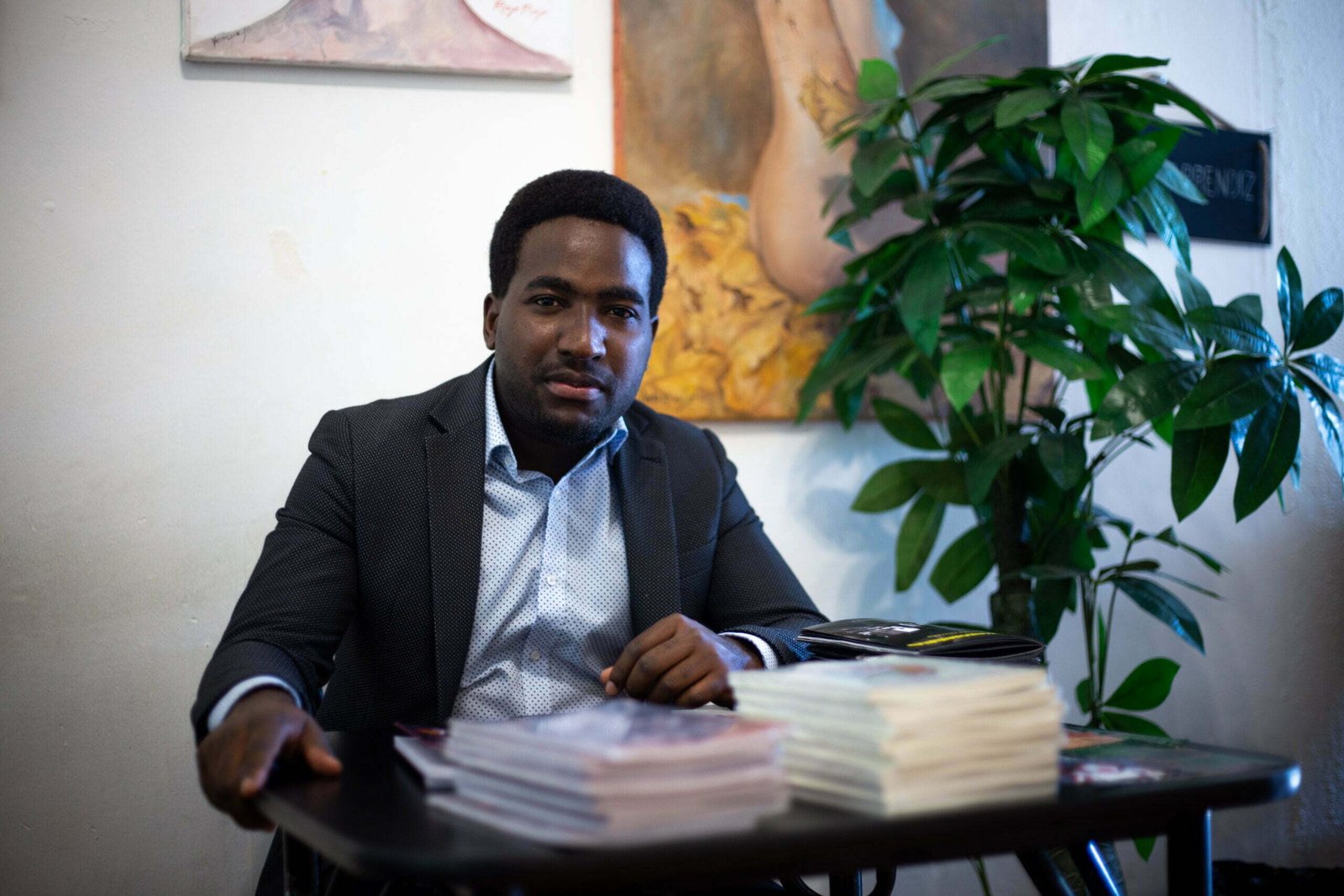
I am Stevenson Jacques, originally from Haiti, a professional electrician , theater actor, novelist, poet, writer, art lover, known as "Steve the Poet".
In 2008 I began to work more in the world of art, writing and theater; I was part of several theater companies.
Since 2014 I have been a member of “Tanbou Literè”; a group of dynamic young people who love art and literature.
I published in the anthology "Champurria" in 2018, and in the literary magazine "Desvanecimiento" in 2022. I have participated in several writing workshops and literary courses.
I am a member of a very dynamic and committed group of Haitian writers of my generation, “REK”; They are activist writers in defense and appreciation of the Haitian Kreyòl language.
After many years of publishing sporadically, I decided to publish my first bilingual poetry collection, "flor de tumba – Flè kav," along with its accompanying audiobook, in January 2023. In the same year, 2023, I published a novel in Creole, "Depi nan benbo," which I had been working on for over six years.