
Works of William Shakespeare: tragedies, comedies and sonnets
To speak of William Shakespeare is to delve into one of the most vast and complex literary universes in history. Considered the most influential playwright of all time , his work not only shaped the course of Elizabethan theatre but also became a cornerstone of world literature. From the tragic passions of Hamlet and Macbeth , through the comic freshness of A Midsummer Night's Dream and Much Ado About Nothing , to the lyrical intensity of his Sonnets , Shakespeare explored human emotions in all their richness and contradiction.
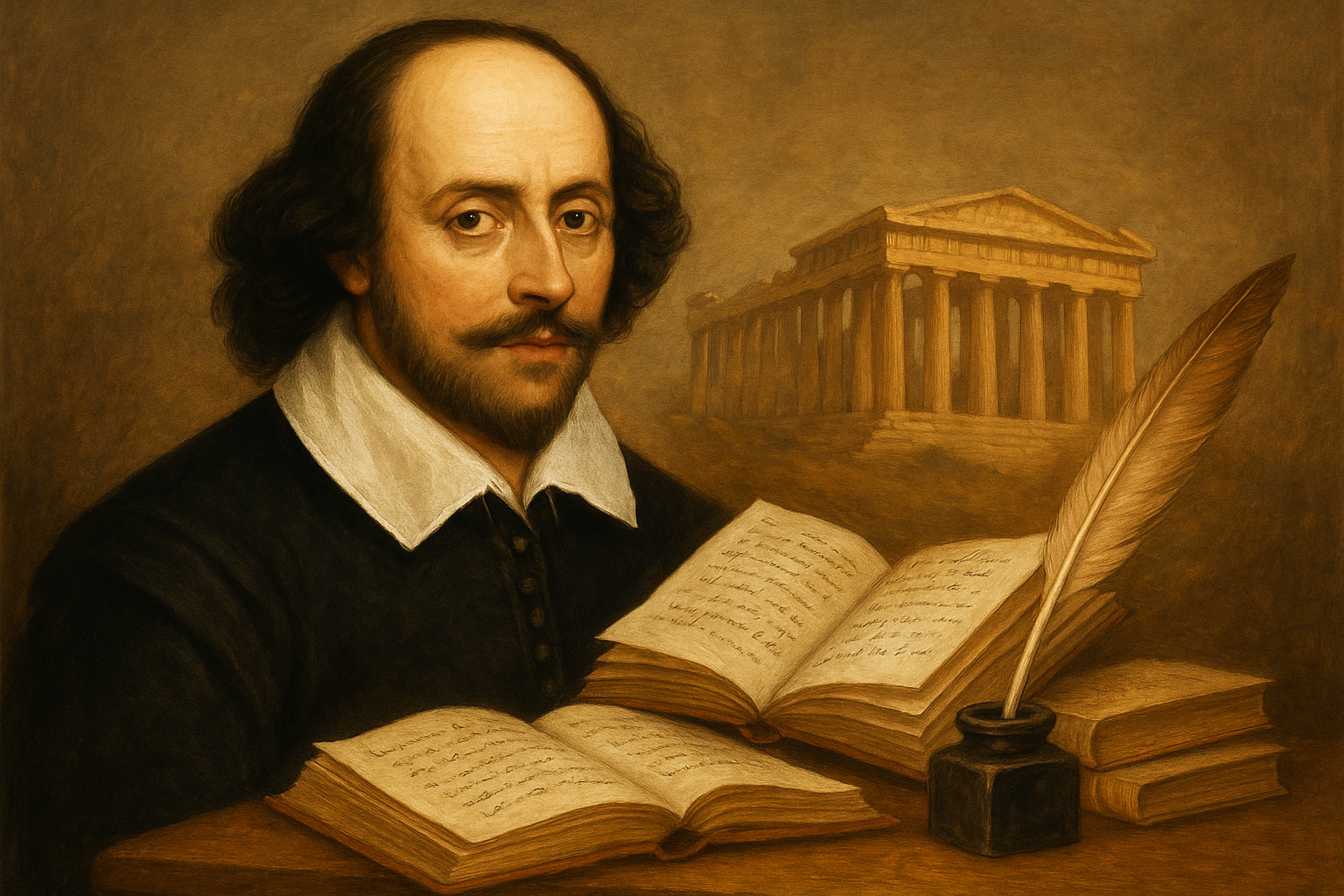
If you're interested in how other classical traditions influenced Shakespeare, be sure to read the article on Homer: life and legacy of the universal Greek poet.
My personal experience with Shakespeare began in college, when I first read Hamlet . I remember being struck by the power of the "to be or not to be" soliloquy, not just as a recurring cultural reference, but as an existential dilemma that remains relevant today. That blend of philosophical introspection and theatrical drama largely explains why his plays continue to be relevant, performed, and adapted all over the world.
In this article, we will explore his major works, divided into tragedies, comedies, history plays, and sonnets. We will also examine how his literary style and legacy have transcended more than four centuries, making the Bard of Stratford-upon-Avon an immortal symbol of the art of words.
For an overview of his life, you can also consult Shakespeare's biography on Wikipedia , which serves as a starting point, although here we will go further, analyzing his impact from the perspective of his most representative works.
Overview of Shakespeare's Works
Shakespeare's corpus includes 39 plays, 154 sonnets, and several narrative poems . His plays are usually classified as follows:
- Tragedies, where ambition, destiny, and human frailty lead to a fatal outcome (Hamlet, Macbeth, Othello, Romeo and Juliet).
- Comedies, full of entanglements, humor, social criticism and happy endings (A Midsummer Night's Dream, The Taming of the Shrew, As You Like It).
- Historical works, which portray English politics and the construction of power (Richard III, Henry IV, Henry V).
- Sonnets and lyric poetrywhere her most intimate voice emerges, reflecting on love, time, and beauty.
Similarly, authors such as Gustave Flaubert and Javier Marías also portrayed the human condition in their narratives.
The richness of these categories lies not only in the form, but in the crossing of genres : in tragedies there is humor, in comedies there is political criticism, and in sonnets we find the same philosophical depth as in his dramas.
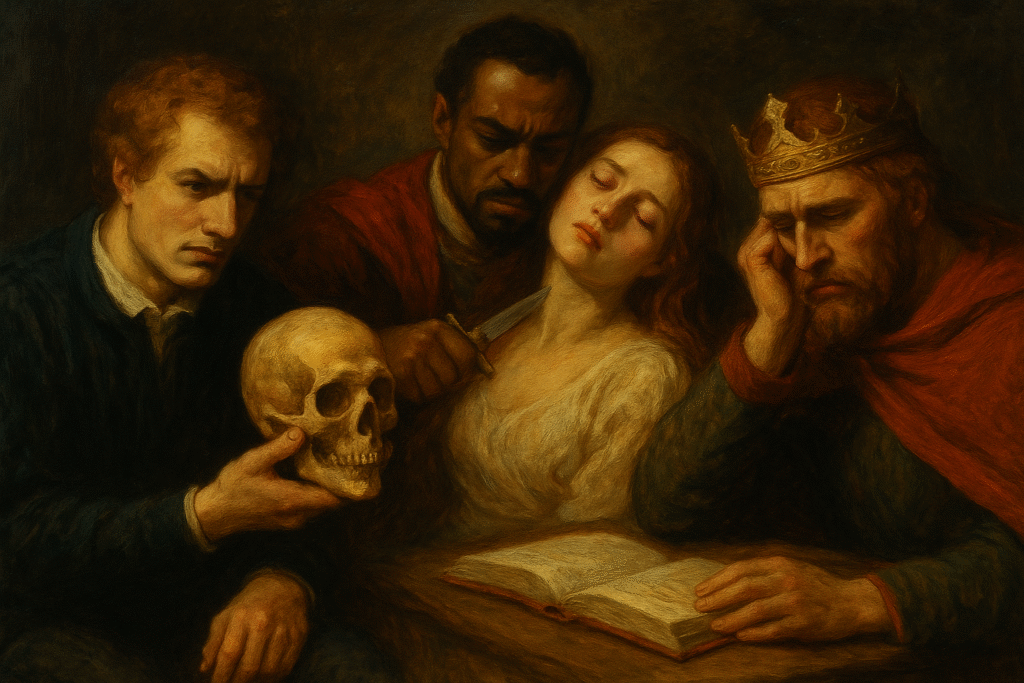
HamletThe existential dilemma
Among all his works, Hamlet It is perhaps the most studied and performed. The story of the Danish prince who wavers between avenging his father's death or succumbing to melancholy has become a symbol of modern thoughtHis famous "to be or not to be" monologue reflects the existential angst that transcends eras and cultures.
I recommend you read Hamlet on Shakespeare.org.uk to explore how each scene raises relevant philosophical questions. Similarly, Lord Byron: the poet of English Romanticism He explored doubt and destiny in a poetic key.
MacbethAmbition and destiny
In Macbeth , Shakespeare shows us the moral corruption that can arise from unbridled ambition. The protagonist, driven by his wife and the enigmatic witches, murders King Duncan and plunges into a spiral of violence and paranoia. For me, this tragedy has always been fascinating because it combines the political, the psychological, and the supernatural.
OthelloJealousy and manipulation
Othello, the Moor of Venice , is a brilliant study of jealousy and manipulation. The figure of Iago, one of literature's greatest villains, demonstrates the destructive power of lies. This drama remains highly relevant today: how many times have we seen slander destroy relationships and careers?
Romeo AND JulietLove and fate
Although often remembered as the most famous love story, Romeo and Juliet is essentially a tragedy about social intolerance and family conflict. Its dramatic ending is a critique of inherited hatred and an exaltation of youthful passion. This focus on tragic love has echoes in Hispanic literature, such as in Jorge Isaacs's María . I recall seeing a contemporary version set in an urban neighborhood, and I was struck by how the text still resonates four centuries later.
Summer night DreamMagic and humor
Set in an enchanted forest, this play blends the fairy world with the romantic entanglements of mortals. The confusion of identities and magical spells make this comedy a timeless favorite. I've always found it fascinating how Shakespeare combines the magical and the human within a single plot.
Much ado About NothingThe battle of wits
In this play, the duo of Beatrice and Benedick engage in a brilliant verbal duel, revealing both their pride and their mutual attraction. It is a perfect example of Shakespeare's verbal wit and how humor can be a vehicle for addressing serious themes such as honor and reputation.
The Taming of the ShrewLove and power at stake
One of the most controversial comedies due to its portrayal of women. However, many contemporary critics interpret it as a satire of the social norms of its time. The story of Petruchio and Katharina reflects the clash of wills and the tension between love and power.
King's Night: identity and carnival
Here another of Shakespeare's great themes unfolds: the confusion of identities. Viola, disguised as a man, sets off a whirlwind of romantic entanglements that are only resolved with the final revelation. Its carnivalesque and festive tone reminds us that, behind the laughter, there is always a reflection on desire and freedom.
Richard III: the embodiment of ambition
With its famous opening line , “Now is the winter of our discontent,” this play introduces a ruthless, manipulative, and cynical protagonist. Richard III is one of the most memorable villains in world literature, and his rise and fall illustrate how unbridled ambition leads to ruin.
Richard II and the question of legitimate power
This play focuses on the fall of a weak king and the usurpation of his power. Shakespeare raises a key theme throughout his history plays: is power a divine right or a political pact that can be broken?
Henry IV (Parts I and II): Politics and Popular Life
These plays combine grand themes of the monarchy with scenes from everyday life. The contrast between Prince Hal—who will later become Henry V—and the rogue Falstaff offers a reflection on maturation, responsibility, and the difference between courtly and popular life.
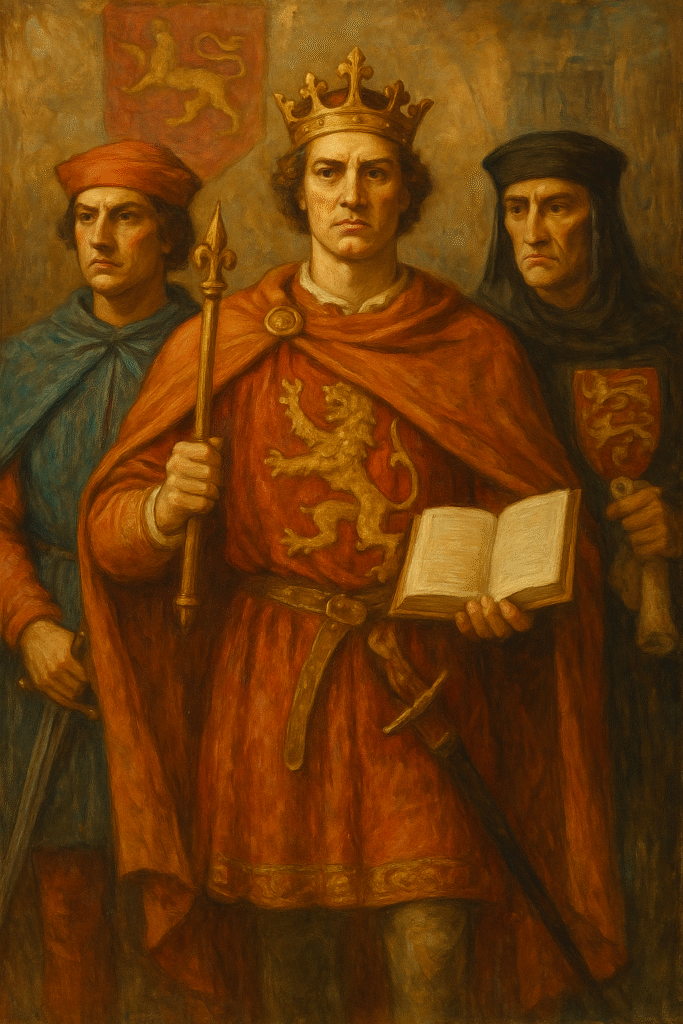
Henry V: the national hero
Considered one of the most patriotic plays, it depicts the young monarch as a military leader. His famous speech at the Battle of Agincourt is a hymn to national unity and glory in adversity. Today, it continues to be studied as an example of the use of theater in constructing a collective identity.
The sonnets and the poetic works of William Shakespeare
In addition to his monumental contribution to theater, Shakespeare left a lyrical legacy that has endured as one of the pinnacles of world poetry. Shakespeare's poetry connects with universal lyrical currents, such as those of Pablo Neruda and Gabriela Mistral.
The cycle of sonnets
Published in 1609, Shakespeare's 154 sonnets explore love, the passage of time, beauty, betrayal, and immortality through the power of words. Written in the characteristic Elizabethan sonnet form (three quatrains and a concluding couplet, in iambic pentameter), they offer an intimate and profoundly human voice.
The main topics include:
- Time as the enemyBeauty fades, but art can immortalize it.
- Ambiguous love: addressed to a “handsome young man” and the “dark lady”, which has generated debates about its autobiographical background.
- The power of poetryThe idea is repeated that verses conquer oblivion and preserve memory.
Narrative poems
Before devoting himself fully to the theatre, Shakespeare also wrote narrative poetry that circulated successfully among his contemporaries:
- “Venus and Adonis” (1593): an erotic and mythological poem that plays with unrequited desire.
- “The Rape of Lucrece” (1594): a poetic tale about the abuse of power and sullied honor.
- “The Passionate Pilgrim” (1599): collection that includes sonnets and poems partly attributed to Shakespeare.
The poetic legacy
Although his plays often overshadow his poetry, Shakespeare's sonnets and poems have inspired generations of writers, musicians, and artists. His intimate voice and ability to transform the everyday into the universal ensure that his works continue to be studied and recited worldwide.
Conclusion: Shakespeare, the immortal voice of world literature
The work of William Shakespeare is not only the cornerstone of English theatre, but also a cultural compass for humanity. His tragedies remind us of the fragility of human passions, his comedies celebrate laughter and intelligence, his historical dramas reveal the complexities of power, and his sonnets give voice to love and time.
Beyond his own time, Shakespeare remains relevant because he knew how to speak of the eternal: desire, ambition, hope, betrayal, beauty, and death. Each reading of his texts opens new interpretations, and his influence extends from literature to film, music, and contemporary philosophy.
Today, four centuries after his death, Shakespeare continues to be that “mirror of the human condition” that invites us to think and feel with the same intensity as his characters. His legacy, like that of other universal authors such as Cervantes or Homer , transcends eras and borders.
Frequently Asked Questions about the Works of William Shakespeare
The most famous are Hamlet , Macbeth , Othello , and Romeo and Juliet , along with his Sonnets . These plays represent the best of Elizabethan theatre and remain popular on stages around the world.
Shakespeare transformed the theater into a space for philosophical and emotional exploration. His impact can be compared to that of classical authors like Homer: the life and legacy of the universal Greek poet , and modern authors like Gustave Flaubert.
No. In addition to tragedies, he also wrote comedies, historical dramas, and lyric poetry. For a broader overview of his era, you can check out our article on 19th-century literature: realism, romanticism, and modernism.
His influence extends to the poetry of Pablo Neruda and the narrative of Isabel Allende , who, like him , explored the human condition from different traditions.
Explore our Classical and Universal Poets section and discover articles dedicated to figures such as Miguel de Cervantes or Lord Byron.

I am Stevenson Jacques, originally from Haiti, a professional electrician , theater actor, novelist, poet, writer, art lover, known as "Steve the Poet".
In 2008 I began to work more in the world of art, writing and theater; I was part of several theater companies.
Since 2014 I have been a member of “Tanbou Literè”; a group of dynamic young people who love art and literature.
I published in the anthology "Champurria" in 2018, and in the literary magazine "Desvanecimiento" in 2022. I have participated in several writing workshops and literary courses.
I am a member of a very dynamic and committed group of Haitian writers of my generation, “REK”; They are activist writers in defense and appreciation of the Haitian Kreyòl language.
After many years of publishing sporadically, I decided to publish my first bilingual poetry collection, "flor de tumba – Flè kav," along with its accompanying audiobook, in January 2023. In the same year, 2023, I published a novel in Creole, "Depi nan benbo," which I had been working on for over six years.