
Isabel Allende: biography, works, style and legacy of the Chilean writer
To speak of Isabel Allende is to speak of one of the most influential and widely read writers in contemporary Spanish-language literature. Born in Chile, she has transformed her life experiences—marked by exile, historical memory, and the search for identity—into novels that have reached millions of readers worldwide.
From The House of the Spirits to Paula , her works intertwine the intimate with the collective, the historical with the magical, the feminine with the universal. Isabel Allende has established herself not only as a storyteller, but also as an ethical and political voice that has given visibility to women and the struggles of Latin America.
More on this context in Contemporary Writers.
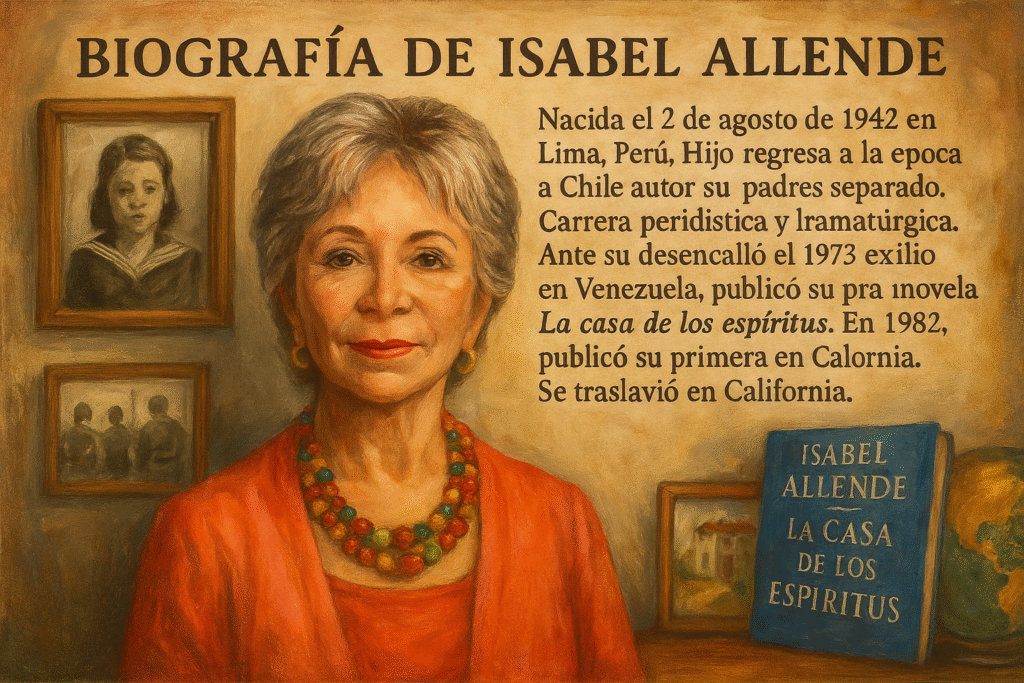
Biography of Isabel Allende
Childhood and youth in Chile
Isabel Allende Llona was born on August 2, 1942, in Lima, Peru , while her father was working as a diplomat. However, she spent most of her childhood and adolescence in Chile , after her parents separated. She grew up in a family environment steeped in politics: she was the niece of Chilean President Salvador Allende, which linked her personal life from an early age to the vicissitudes of her country's history.
Her childhood was marked by a love of reading and writing. From a very young age, she began inventing stories and developing an interest in storytelling as a way of understanding the world. This creative impulse coexisted with a sensitivity to social issues, something that would later be reflected in the human commitment of her work.
My personal connection to his literary beginnings
In this respect, I deeply identify with Isabel Allende. I, Stevenson Jacques , born in Haiti in 1993, also discovered from a young age that literature was a way to interpret and transform reality. Like Allende, I experienced that the personal and the historical are not separate: my writing arose from my contact with the theater, the memory of my homeland, and, later, my exile in Chile.
Reading about his early years in Chile reminds me of my own beginnings in Haiti and how, even in the most uncertain times, literature offered a path of resistance and hope.
Journalism, exile and first steps in writing
Before becoming a world-renowned author, Isabel Allende forged her career in journalism. During the 1960s, she worked as an editor and columnist for Chilean magazines and newspapers, and also participated in television programs. Her style was approachable, ironic, and socially conscious, foreshadowing her critical perspective on society.
The 1973 coup in Chile, which overthrew Salvador Allende, marked a turning point in her life. Political repression forced Isabel Allende to leave the country and settle in Venezuela , where she lived for more than a decade. It was in this context of exile that she found the strength to become a novelist.
In 1982, he published *The House of the Spirits *, a work that not only brought him international fame but also transformed his experience of memory, loss, and reconstruction into universal literature. This first novel was written as a letter to his dying grandfather, a gesture that reflects how the intimate and the historical intertwine in his work.
My personal connection to this stage
Isabel Allende's story of exile resonates deeply with me. I, Stevenson Jacques , also know what it means to leave one's homeland in search of a new space for creation. When I arrived in Chile in 2017, I faced not only the language barrier, but also the challenge of rebuilding myself as a writer in a new country.
Like Allende, I found in writing a refuge and a bridge: she transformed her exile in Venezuela into the beginning of a universal literary career, and I transformed my uprooting in Chile into an opportunity to write in Spanish and connect with readers beyond Haiti.
International success and literary consolidation
The publication of The House of the Spirits in 1982 marked a turning point in Isabel Allende 's career . The novel was enthusiastically received by critics and readers alike, quickly becoming a publishing phenomenon translated into dozens of languages. With its blend of history, family memoir, and elements of magical realism, the work placed Allende within the tradition of the Latin American Boom , albeit with a distinct voice, marked by a female perspective.
Following that initial success came titles that solidified her prestige: Of Love and Shadows (1984), Eva Luna (1987), and The Stories of Eva Luna (1989). In these works, Allende explored themes such as love, social justice, political memory, and the identity of Latin American women.
In the 90s and 2000s, she continued to expand her reach with historical novels such as Daughter of Fortune (1999) and Inés of My Soul (2006), showing her ability to reconstruct past contexts with documentary rigor and narrative sensitivity.
His international success was not only literary, but also cultural: several of his novels were adapted for film and theater, which multiplied his impact on different generations of readers.
My resonance with this moment of consecration
When I think about this overwhelming success, I recognize in myself the desire to take the word beyond borders. I, Stevenson Jacques , felt something similar in 2023 when I published my bilingual poetry collection, Flor de tumba – Flè kav , accompanied by an audiobook, and my novel in Creole, Depi nan benbo . Although on a smaller scale, I understood what it means to put one's own voice into international circulation.
Isabel Allende inspires me in that conviction: that writing is not only an intimate act, but also a dialogue with millions of people in different languages and contexts.
Personal life, philanthropy and current events
Isabel Allende 's life has been marked by writing, but also by intense personal experiences. One of the most significant was the death of her daughter Paula in 1992, an event that gave rise to the autobiographical novel Paula (1994). In this work, Allende poured her grief into words, transforming the tragedy into an intimate and universal testament to loss and love.
Beyond her work as a writer, Allende has distinguished herself through her social commitment. In 1996, she founded the Isabel Allende Foundation , dedicated to promoting the rights of women and girls in vulnerable situations around the world. This project reflects the consistency between her work, which always gave voice to strong female characters, and her public life as a champion of gender equality.
Today, Allende continues to write and publish. At over 80 years old, she remains an active figure on the international literary scene, with recent books such as * Mujeres del alma mía* (2020), where she reflects on feminism, aging, and personal freedom. Her work remains relevant, with constant reissues and a readership that grows with each generation.
My personal connection with this active present
Reading about Isabel Allende in her later years, I can't help but think about the importance of keeping the passion for literature alive despite the difficulties. I, Stevenson Jacques , also founded my platform Mundo Escritores in 2023 , with the aim of supporting emerging authors on their path to publication.
Just as Allende created a foundation to extend her legacy, I seek for my project to be a space for meeting and support among writers, because literature does not end in published books: it continues in the community that makes it possible.
Works by Isabel Allende
Isabel Allende 's literary career rests on a series of novels that have touched millions of readers worldwide. Her work blends the personal with the historical, the magical with the real, always from a profoundly human perspective.
The House of the Spirits (1982): the beginning of worldwide success
Originally published in Spain, this novel made Isabel Allende an international figure. Inspired by the history of several generations of a Chilean family, the work intertwines the political with the personal, employing elements of magical realism.
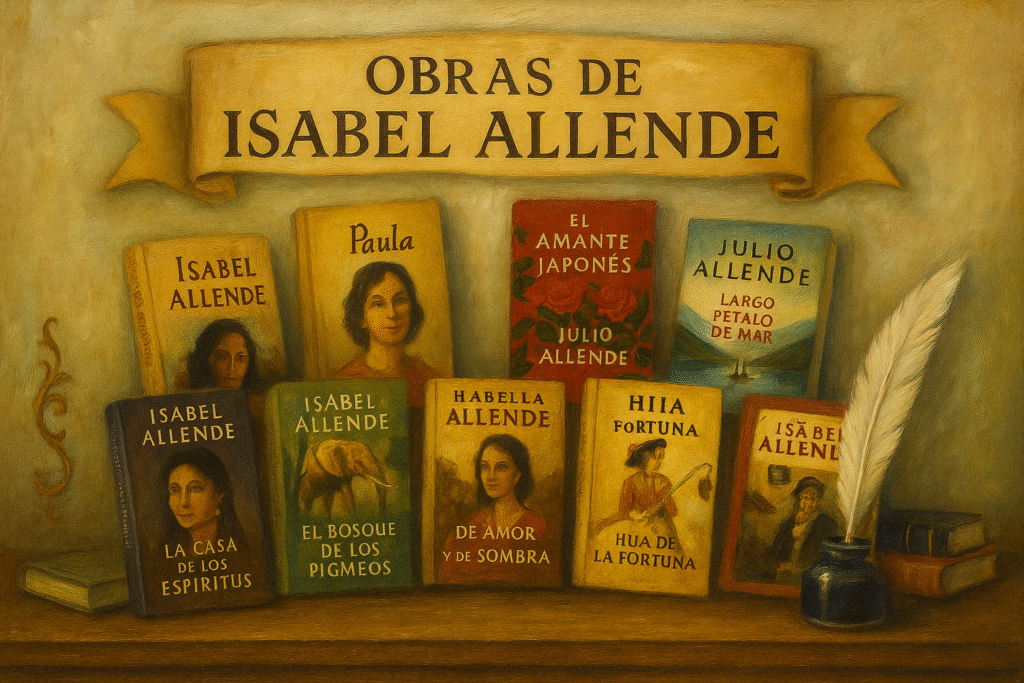
With unforgettable characters like Esteban Trueba and Clara del Valle, The House of the Spirits showed that the private and the collective are inseparable.
More on this context in Contemporary Literature.
Eva Luna (1987) and Tales of Eva Luna (1989): identity and female voice
With Eva Luna , Allende brought to life a strong protagonist, marked by struggle, love, and imagination. The novel explored female identity within a Latin American context of inequality, reinforcing her position as a narrator committed to the visibility of women.
A couple of years later, he published Tales of Eva Luna , expanding that narrative universe with stories full of sensuality, irony and social realism.
Paula (1994): memory and personal pain
Written after the death of her daughter, Paula is perhaps Isabel Allende's most intimate work. In it, she combines autobiography with family chronicle and historical reflection.
The book was not only an exercise in mourning, but also a way to share with her readers the experience of love, loss, and resilience in the face of adversity.
Historical novels: Daughter of fortune (1999) and Ines of my soul (2006)
With these works, Allende ventured into historical fiction. Daughter of Fortune tells the story of a Chilean woman's search for identity in the context of the California Gold Rush, while Inés of My Soul recovers the voice of Inés Suárez, a key figure in the conquest of Chile.
Both novels showcase Allende's ability to reconstruct historical scenarios with sensitivity and rigor, without abandoning the focus on female characters who defy the limits of their time.
Other notable titles
In recent decades, Isabel Allende has continued to expand her body of work with novels such as Maya's Notebook (2011), Beyond Winter (2017), and Women of My Soul (2020). All of them reflect a mature, conscious voice, faithful to her recurring themes: memory, love, feminism, and exile.
Literary style and main themes in the work of Isabel Allende
Isabel Allende 's narrative is characterized by its emotional richness and its ability to intertwine the intimate with the collective. Through her clear, poetic, and profoundly human style, she has connected with millions of readers worldwide.
Magical realism and historical memory
Allende is frequently associated with magical realism , a literary tradition in which the supernatural and the real coexist harmoniously. However, her contribution lies in incorporating the historical memory of Chile and Latin America into this narrative framework.
In novels like The House of the Spirits , magic is not an end in itself, but a resource to delve deeper into historical processes: dictatorships, social struggles, exiles, and cultural transformations.
More details in Contemporary Literature.
Feminism as a guiding thread
One of Allende's greatest contributions is her feminist perspective. In her works, women are not secondary characters, but active protagonists who confront injustices, seek autonomy, and challenge patriarchal structures.
Eva Luna, Clara del Valle, and Inés Suárez are examples of how Allende places the female voice at the center of the narrative . This perspective has been key for readers around the world to find in her work a reflection of their own struggles.
Exile and identity
Exile not only marked his life, but also his writing. The experience of leaving Chile and rebuilding his life in Venezuela and then in the United States is reflected in characters who live between worlds, who seek belonging, and who transform uprootedness into narrative force.
This theme connects her with other Latin American writers in exile, such as César Vallejo or Julio Cortázar , who also wrote from a distance.
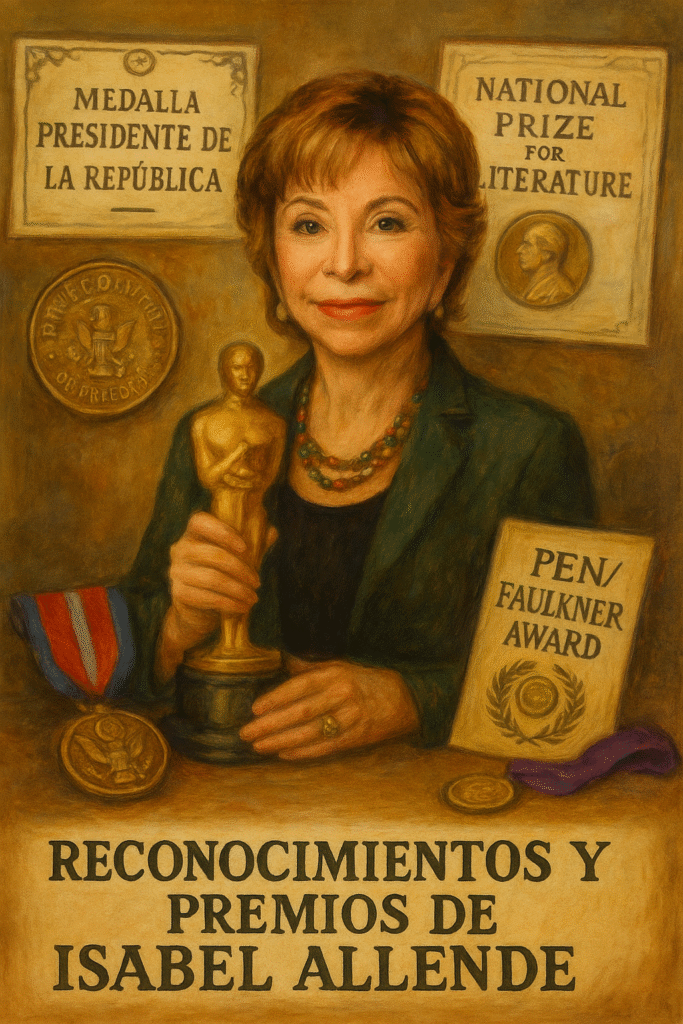
Isabel Allende's awards and recognitions
Isabel Allende 's career has been recognized not only by her readers, but also by numerous cultural institutions around the world. Her awards reflect both the literary impact of her work and her influence in the social and political spheres.
International awards
Throughout his career, Allende has received numerous awards, including:
- Chilean National Literature Prize (2010): the highest literary distinction of her native country, which officially consecrated her as one of the most important voices of its cultural tradition.
- Hans Christian Andersen Prize for Literature (2012): awarded in Denmark for his contribution to universal narrative.
- Presidential Medal of Freedom (2014): awarded in the United States by President Barack Obama, in recognition of her contribution to culture and the defense of human rights.
Awards in America and Europe
In addition to major awards, Isabel Allende has received honorary doctorates from universities in the United States, Chile, Mexico, and Europe. She has also been recognized by feminist and human rights organizations that value her commitment to gender equality and social justice.
These accolades show that his impact transcends the literary: Allende has become a global cultural and ethical benchmark.
More on this context in Contemporary Writers.
Influence and legacy of Isabel Allende in world literature
Isabel Allende 's work transcends the boundaries of narrative to become a touchstone of Latin American and world literature. Her ability to intertwine the personal with the historical, and the feminine with the collective, has positioned her as one of the most widely read authors in the Spanish language.
Female voice in Latin American literature
Allende paved the way for female voices to occupy a central place in contemporary narrative. With strong and memorable characters, she has inspired generations of writers who engage with her legacy today.
This contribution connects her with figures such as Gabriela Mistral , who opened spaces in poetry, and with Alfonsina Storni , a reference point for 20th-century feminist poetry.
Continuity of magical realism and historical memory
Although magical realism reached its peak with authors like Gabriel García Márquez , Isabel Allende revitalized it by giving it a feminine touch and linking it to the political history of Chile and Latin America. Her literature demonstrates that the genre remains fertile ground for exploring memory and identity.
Inspiration for new generations
Allende has been translated into more than 40 languages and has sold tens of millions of copies worldwide. Her novels are part of academic programs in universities and schools, ensuring that her influence remains alive in the formation of new generations of readers and writers.
A legacy beyond literature
Her work with the Isabel Allende Foundation confirms that her legacy is not limited to books: she is also a symbol of social commitment, defense of women's rights and promotion of justice.
In this sense, his figure rises to the same level as universal literary references such as Pablo Neruda or Mario Benedetti.
Frequently Asked Questions about Isabel Allende
Isabel Allende (1942) is a Chilean writer, considered one of the most widely read and translated Latin American authors in the world. Her work combines magical realism, historical memory, and a feminist perspective.
Among his most notable titles are The House of the Spirits (1982) Of Love and Shadows (1984) Eva Luna (1987) Paula (1994) Daughter of fortune (1999) and Ines of my soul (2006).
see more at Modern and contemporary works.
His narrative combines:
Magical realism.
The historical and political memory of Chile and Latin America.
Strong and memorable female characters.
A sensitivity towards exile and identity.
Because their protagonists are usually women who fight against oppression, seek autonomy, and challenge traditional roles. Furthermore, their social activism reinforces their commitment to gender equality.
Among the most relevant are the Chilean National Literature Prize (2010) , the Hans Christian Andersen Literature Prize (2012) and the Presidential Medal of Freedom (2014) in the United States.
Conclusion: Isabel Allende, a universal storyteller
Isabel Allende 's career demonstrates that literature can be, simultaneously, memory and future, intimacy and community. With more than forty years in the profession, she has given voice to unforgettable characters and transformed her personal experiences—exile, loss, the search for identity—into stories that have moved readers around the world.
From The House of the Spirits to Women of My Soul , her work maintains the freshness of someone who knows how to reinvent herself without losing fidelity to her essential themes: justice, historical memory, feminism and love in all its forms.
I, Jacques Stevenson , find personal inspiration in Isabel Allende. Like her, I write from the crossroads of cultures and languages, with the certainty that literature is a bridge connecting different worlds. Her life and work remind me that writing doesn't end on the published pages: it continues in the community of readers and in the changes it brings about in those who receive it.
Today, Isabel Allende is not just a Chilean writer: she is a universal storyteller, whose voice will continue to accompany future generations.
See more in Contemporary Writers.
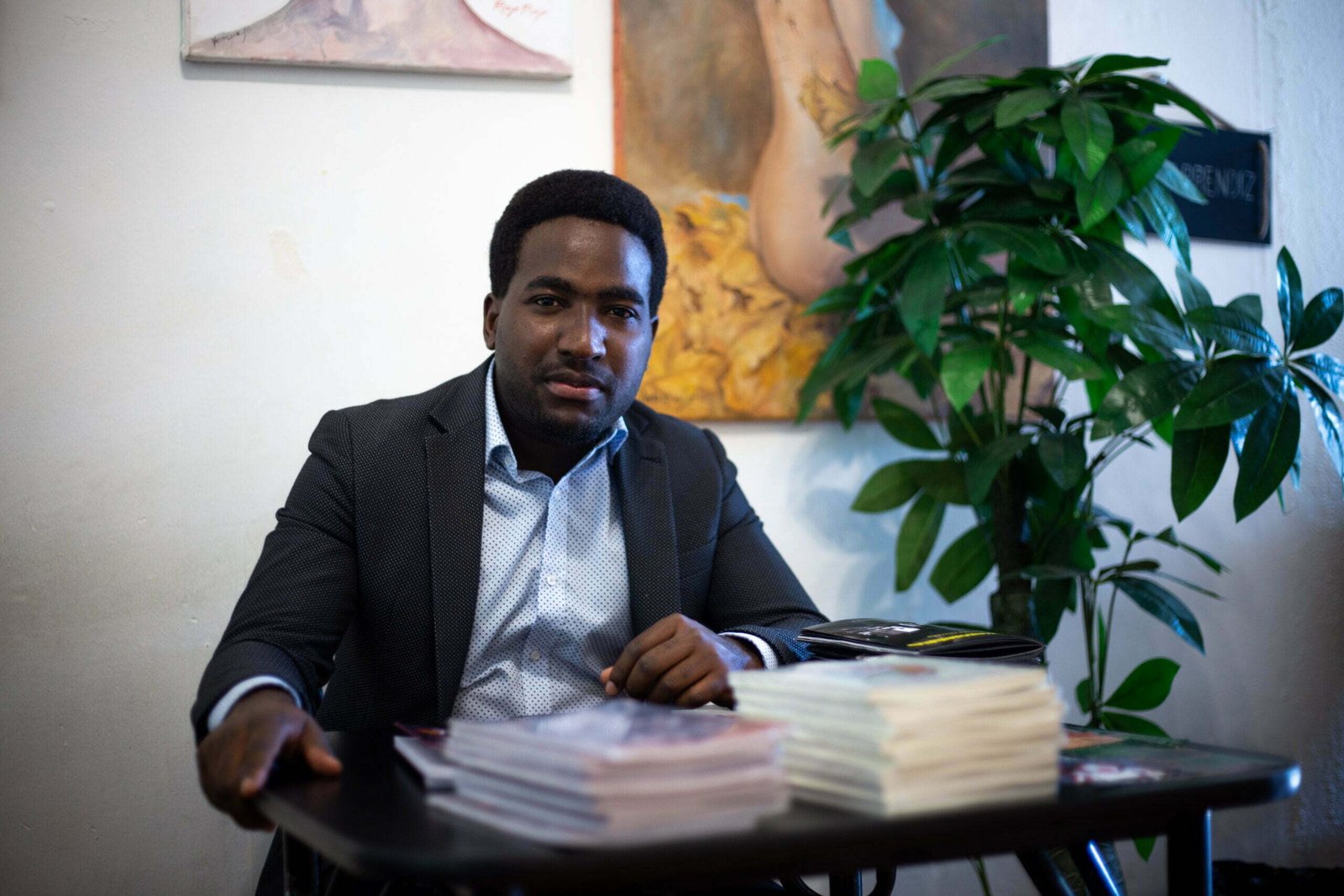
I am Stevenson Jacques, originally from Haiti, a professional electrician , theater actor, novelist, poet, writer, art lover, known as "Steve the Poet".
In 2008 I began to work more in the world of art, writing and theater; I was part of several theater companies.
Since 2014 I have been a member of “Tanbou Literè”; a group of dynamic young people who love art and literature.
I published in the anthology "Champurria" in 2018, and in the literary magazine "Desvanecimiento" in 2022. I have participated in several writing workshops and literary courses.
I am a member of a very dynamic and committed group of Haitian writers of my generation, “REK”; They are activist writers in defense and appreciation of the Haitian Kreyòl language.
After many years of publishing sporadically, I decided to publish my first bilingual poetry collection, "flor de tumba – Flè kav," along with its accompanying audiobook, in January 2023. In the same year, 2023, I published a novel in Creole, "Depi nan benbo," which I had been working on for over six years.