
The importance of poetry in human life: why we need it today

What does “importance of poetry” mean (and why is it not just “pretty art”)
When someone says “poetry is important ,” it sometimes sounds like a nice phrase, a cultural compliment that sounds good… but doesn’t lead to anything concrete. For me, the importance of poetry begins when I bring it down to earth: what exactly does poetry do in human life? What changes in me (or in us) after reading, writing, or listening to it?
Poetry is not merely "an embellishment of language." It is a way of using language with a different intention : not only to inform, but to reveal. Not only to describe what happened, but to evoke what is happening inside. And in this "evoking feeling" lies enormous value: emotional, cultural, cognitive, and even communal.
Poetry as a human tool (not just a literary one)
Poetry is often put on display: “literature,” “art,” “Spanish class.” But its real impact happens outside the display case, in everyday moments: when a phrase stays with you, when an image brings order to your inner chaos, when a verse helps you understand something without explaining it like a textbook.
Poetry functions as a human tool because it works with three raw materials that we all possess:
- Emotions (what we feel).
- Conference proceedings (what we experience and inherit).
- Language (how we think, because we think with words).
And when those three things come together, strange and valuable things happen: we understand what we couldn't say, we recognize what we thought was only ours, and we look at the world with a finer lens.
Poetry = form + meaning (rhythm, image, silence)
A key difference: poetry doesn't just say things; it also constructs them with form. Meaning isn't solely in the "message," but in how it's conveyed.
- Rhythm: It's not just musicality; it's breathing, pause, insistence.
- Image: It's not decoration; it's visual thinking.
- Silence (the unspoken): It's part of the meaning. Sometimes a poem "explains" precisely by what it leaves open.
That's why a poem can strike you with just a few words. Not because it's mysterious, but because its form is designed to make you feel and think at the same time.
The “poetic” vs. “the corny”: a key difference
Many people avoid poetry because they associate it with sentimentality: empty, saccharine phrases, automatic romanticism, and grandiloquent words devoid of truth. And yes, sentimental, empty writing exists. But that doesn't define poetry.
Poetry doesn't depend on "speaking beautifully," but on observing with precision . A text is poetic when:
- find an image that truly illuminates something,
- Choose words that are not superfluous,
- It sustains a real emotion (even if it's uncomfortable),
- and it leaves you thinking or feeling differently than before.
If sentimentality is sugar, poetry is a more complex flavor: it can be sweet, bitter, harsh, silent. And that's precisely why it works: because life isn't just one flavor.
What is the purpose of poetry in a sentence (operational definition)
If I had to put it in a simple, usable, and straightforward sentence:
Poetry serves to transform experience into meaning.
In other words: it takes something we experience (a loss, a joy, a fear, a contradiction, a place, a memory) and transforms it into something we can understand, share, or inhabit.
Sometimes it does so with beauty. Sometimes with starkness. Sometimes with humor. But almost always with a quality that is uncommon in the daily rush: density . In a poem, a single line can hold more of the world than a page of explanation.
Poetry as a technology of language
To say “technology” here isn’t to be trendy; it’s to be precise. A technology is a tool that amplifies human capabilities. Poetry amplifies several:
- Amplify attention: It forces you to read more slowly, to look more closely.
- Amplify the nuance: It teaches you that “sad” is not the same as “exhausted”, “nostalgic” or “empty”.
- Amplify empathy: It lends you other people's eyes, without asking your permission.
- Amplify symbolic thinking: connects ideas that seemed separate.
And that has a direct effect on everyday life. Because language isn't just "how we speak": it's how we understand each other . When language becomes impoverished, experience becomes coarser. When language is refined, experience becomes more livable.
A simple example (invented, but clear): it's not the same to say "I'm unwell" as it is to be able to say "I feel a tiredness that isn't physical ." That second phrase opens a door. Poetry often teaches us how to build doors.
Poetry as a voice for emotions: putting a name to what we feel
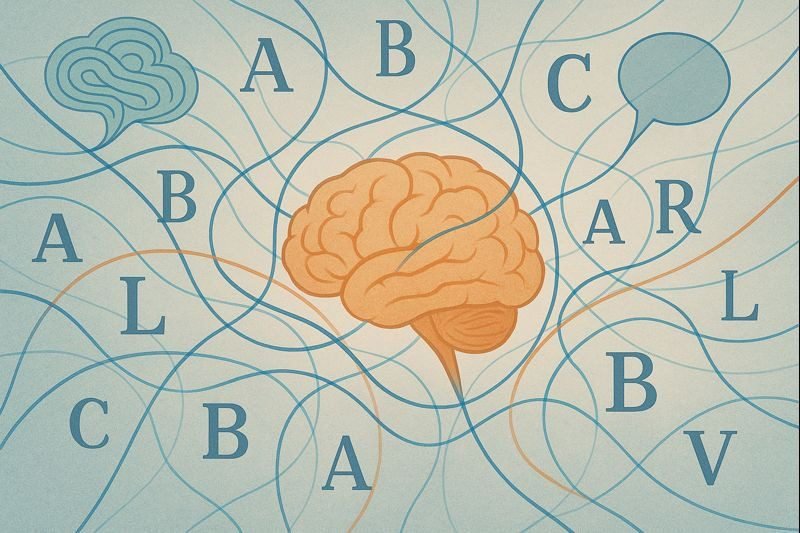
There are emotions we recognize but can't explain. And there are others we can't even name: they're just there, mixed together, like a cloud that shifts shape. In that realm—the intimate, the confusing, the difficult to express—poetry functions as an alternative voice. It doesn't replace life, but it does make it more legible.
The important thing here isn't "feeling sensitive" or "speaking beautifully." The important thing is something more useful: poetry gives us a language for what normally remains trapped in the body, in silence, or in overly general phrases ("I feel bad," "I don't know," "something's wrong"). When an emotion is named precisely, something concrete happens: it ceases to be a faceless monster and becomes an experience we can face head-on.
When everyday language falls short
Everyday language is practical: it's useful for asking, explaining, organizing, and responding quickly. But deep emotions don't always fit within that speed. That's why, when we try to talk about what we feel, we sometimes repeat worn-out phrases: "I'm tired," "I'm in pain," "I miss you," "I feel empty." They're true, but they fall short.
Poetry appears precisely there: when we need to say something with more nuance. It does so by stretching language, twisting it slightly, taking it to a point where it can contain what previously overflowed.
Metaphor and image: saying without explaining
A metaphor is not "an ornament": it is a way of thinking. And a poetic image is not a decoration: it is a way of making an emotion visible .
- If someone says: “I feel sad”We understand the idea.
- If someone writes: “Sadness is a room where the air is heavy”We not only understand: sorry.
That's key: poetry doesn't always "explain" like a definition; it suggests like an experience. And that suggestion can be more precise than a lengthy explanation, because it doesn't try to close off meaning: it opens it up.
The poetic image also avoids a common trap: reducing an emotion to a single word. Sometimes it isn't sadness: it's a sadness tinged with anger. Or guilt. Or nostalgia. Or fear. A poem can hold that mixture without forcing it to immediately "order itself."
Empathy: reading a poem as “living another life”
When we read poetry, we don't just receive information: we enter into a point of view. That is one of its most human aspects: poetry trains us to feel and understand from a different perspective.
Unlike everyday conversation—which is often filled with defensiveness, masks, or quick comebacks—a poem is usually a space where someone dares to say what they wouldn't say aloud. That honesty (or that search) creates a bridge: even if we haven't experienced the same things, we recognize something similar.
Poetic empathy is not about "agreeing" with the poem. It is something more basic and valuable: it is accepting that the other person's experience exists, has texture, and deserves to be listened to attentively.
Why a verse can be more comforting than advice
A piece of advice tries to solve. A verse, often, tries to accompany.
When someone is going through a difficult time, it's common to hear phrases like, "Cheer up," "It'll pass," "Look on the bright side." Although they come from good intentions, they can sound distant or insufficient. Poetry, on the other hand, often does something different: it puts words where before there was only internal pressure. And that can provide relief, not because it "fixes" the problem, but because it makes it shareable.
A verse can accompany for three reasons:
- It does not require an immediate response.
- It does not minimize what it feels like.
- It does not intend to close the wound with a quick phrase.
Sometimes, what we need isn't for someone to explain how to get out; it's for someone to tell us: "Yes, that exists. I've seen it too." Poetry has that power.
Grief, love, fear, hope: what poetry orders from within
There are themes that return to poetry time and again for a simple reason: they are universal and, at the same time, unique. Each person loves differently, fears differently, loses differently. Yet, we all pass through those areas. Poetry is important because it allows us to navigate those experiences with a language that doesn't crush them.
- On duelPoetry can offer a way to talk to what is no longer there: a farewell, a memory, an imaginary conversation that brings order to chaos.
- On loveIt can express what doesn't fit in "I love you": desire, tenderness, conflict, admiration, dependence, freedom.
- On fear, can name what haunts us from within without us seeing it clearly.
- In esperanza, can hold a small light without turning it into superficial optimism.
Important: poetry doesn't automatically transform pain into beauty. Sometimes it leaves it raw. And that rawness also has value: because it avoids emotional deception.
Reading aloud and rhythm: the body understands too
Poetry doesn't just live in the mind: it lives in the body too. Rhythm, pauses, repetition, musicality—all of these affect how we experience the text. That's why one of the most direct ways to connect with a poem is to read it aloud, even if it's just to yourself.
When we read aloud, things happen:
- We notice where we breathe (and where the poem “cuts off” our breath).
- We feel the intensity of certain words, not just their meaning.
- We discovered that there are verses that function like a heartbeat: they return, they insist, they sustain.
If someone says, “I don’t understand poetry,” a simple exercise is this: read the poem twice , and the second time aloud. Often, the meaning doesn’t come as an idea, but as a rhythm: first you feel it, then you understand it.
And therein lies the most concrete importance of this section: poetry offers a language for emotion, but also a minimal ritual for inhabiting it. Not to dramatize it, but to recognize it, name it, and, little by little, integrate it.
Mental and language benefits: think better, read better, write better
I like to put it bluntly: poetry isn't just something you "feel," it also trains you . And it does so in a place that's especially strained these days: the mind. We live surrounded by stimuli, headlines, notifications, and quick opinions. In that context, reading (or writing) poetry is almost an act of quiet resistance: it forces you to slow down, to look closely, and to tolerate complexity without needing to solve it immediately.
That's why, when we talk about the importance of poetry, it's not enough to say that "it's beautiful" or that "it expresses emotions." There's also a practical dimension: poetry improves the way you think , the way you use language , and the way you understand what's happening to you . These are benefits that aren't always noticeable right away, but they accumulate over time, like a muscle getting stronger.
Attention and depth (the opposite of “scrolling”)
One of the clearest effects of poetry is that it changes your relationship with attention. You can't read a poem the same way you read a WhatsApp message or a quick post. Even a short poem demands something different: pausing, rereading, sensitivity to detail.
In a poem, a word can be chosen for its sound, its double meaning, its rhythm, its emotional weight, what it suggests, and what it conceals. This forces you to read with a kind of attention that we use less and less in everyday life: sustained attention.
How a poem trains concentration
Concentration isn't about "not getting distracted"; it's about returning to the text again and again without getting frustrated. Poetry trains you to do that naturally, because you don't always understand it "the first time" (and that's not a flaw: it's part of the game).
A simple exercise that I recommend—and that works even for beginners—is this:
- First reading: Just to listen to the poem. Without analyzing it.
- Second reading: Underline three words that catch your attention (because they are rare, beautiful, harsh, or repetitive).
- Third reading: Ask yourself what changed in you between the first and the third time.
With something so simple, you're already training a valuable skill: focusing your mind on a small object without getting bored. And, in times of distraction, that skill is worth its weight in gold.
Emotional vocabulary and precision
Poetry also improves something that seems minor but makes a big difference: the precision with which we name what we feel . Often, we suffer in a vague way. We say "I feel bad," "I'm tired," "I feel strange." These are real phrases, but they're too broad. And when language is broad, our inner world becomes confused.
Poetry works in the opposite direction: it refines. It teaches you that being sad is not the same as being disappointed; missing someone is not the same as longing for them; anger is not the same as resentment; calmness is not the same as resignation. And when you begin to distinguish these differences, you also begin to understand yourself better.
Nuances: sadness is not the same as melancholy
A concrete example:
- Sadness It usually has something direct to it: a loss, news, a recent injury.
- Melancholy Sometimes it is slower, more atmospheric: a sorrow with memory, a nostalgia that does not always have a clear cause.
When you can name the nuance, it changes how you deal with it. It's not the same to say "I'm sad" as it is to say "I have a gentle melancholy, as if something has been gone for a long time." The second phrase isn't "prettier"; it's more useful , because it describes the situation more accurately.
And here's something important: the precision of language isn't just aesthetic; it's a form of care. Naming things well is taking good care of yourself. Poetry, without promising miracles, gives you the tools for that care.
Imagination and symbolic thought
Poetry opens the imagination, yes, but not in the childish sense of "inventing things" (though that too). It opens it in a more powerful way: it teaches you to see relationships , to connect what seemed separate, to think with symbols, not just with facts.
Symbolic thought is part of being human. We use it when we interpret dreams, when we recall a phrase that resonated with us, when a song takes us back to a certain time, when a scent sweeps us off our feet. Poetry operates on this same logic: it doesn't just give you information, it gives you meaning.
And that ability, applied to life, has a clear effect: we become less literal, less rigid, more capable of understanding complexity without breaking down inside.
View new connections (applicable creativity)
Creativity isn't exclusive to artists. Creativity is also:
- to find a solution to a work problem,
- to communicate better in a difficult relationship,
- to have a new idea for a project,
- to understand a conflict without reducing it to "good vs. bad".
Poetry helps because it trains you to think in associations. For example, instead of saying "I feel trapped," a poem can show you another way of looking at it: "I'm missing windows on the inside." That image doesn't "solve" the feeling of being trapped, but it gives you a different perspective. And sometimes, perspective is the first real change.
There is another, more subtle effect: poetry teaches you to live with ambiguity. A poem can have multiple interpretations and still remain the same poem. This tolerance for ambiguity is an important psychological skill: it makes you less anxious to control everything, less dependent on immediate answers, and more willing to explore.
In summary, in this part the importance of poetry becomes very concrete:
- strengthen your atención,
- tune your emotional language,
- expand your symbolic capacity and creative,
- and it trains you to think more deeply in a world that pushes you to the surface.
Poetry as cultural memory: what an era leaves behind
When I think about the importance of poetry, one idea always comes back to me: poetry remembers for us . Not like an encyclopedia that lists dates, but like a living memory that preserves the emotional climate of an era: what was feared, what was desired, what was kept silent, what was celebrated.
Official history tends to focus on the visible: wars, governments, crises, progress. Poetry, on the other hand, preserves the invisible: the feeling of living in that time. And that makes it an extraordinary cultural document, because it records something that almost never appears in archives: what it felt like to be there.
Poetry and society: values, conflicts, dreams
Poetry is not born in a vacuum. It is written from a language, a city, a landscape, a social class, a generation, a historical tension. Even when a poem seems intimate—a room, a love, a loss—it is permeated by the world around it: customs, morals, ideas about the body, family, power, freedom.
That is why poetry has a dual cultural function:
- It expresses the collective (even if only one voice says it).
- Discuss the present (sometimes without naming it directly).
And this is important because a society is not understood solely by what it declares aloud, but also by what it feels, represses, idealizes, or fears . Poetry enters this territory without asking permission.
A poem as an emotional document of its time
I like to think of it this way: if a news report tells you what happened , a poem often shows you how it hurt , how it was celebrated , or how it was hoped for . In just a few lines, you can find the pulse of an era: the enthusiasm, the distrust, the anger, the faith, the despair, the desire for change.
Furthermore, poetry records small things that history often ignores: street slang, everyday gestures, the way we look at nature, our relationship with the city, our ideas about the future. All of this, with the passage of time, becomes invaluable, because it allows us to see that humanity changes… but also repeats itself.
Oral tradition and heritage (songs, couplets, popular verses)
Before it was a book, poetry was a voice. Many cultures transmitted knowledge, stories, and values through rhythmic forms: songs, couplets, décimas, ballads, proverbs, riddles. And that makes sense: rhythm helps us remember, repetition fixes images, and musicality makes words memorable.
In that tradition, poetry fulfills an almost "community archive" role. It doesn't depend on a library to exist: it can travel in memory. It can pass from one person to another, from one generation to another, even when there is no access to formal reading.
That function is crucial because it sustains something that is not always well protected: cultural continuity . Not only what a people knows, but what a people feels it is.
How poetry preserves what cannot be contained in a “fact”
There are things that data cannot capture. Data can say "there was migration," but it doesn't show you the uprooting in people's bodies. It can say "there was poverty," but it doesn't let you hear the dignity, the weariness, the humor, the anger. It can say "there was social change," but it doesn't show you the vertigo of the new or the nostalgia for what is lost.
Poetry preserves precisely that: texture . And within that texture lies an essential part of human experience. That's why, when an oral tradition is lost, it's not just entertainment that's lost: a way of thinking and feeling about the world is lost.
Language and identity
Poetry also protects language. And when I say "language," I'm not just talking about grammar: I'm talking about identity. The way a people names love, death, nature, home, work, the body, time... says a great deal about how they live.
Poetry works with language as if it were a living organism: it rescues old words, invents new ones, mixes registers, plays with sounds, pushes boundaries. And in that movement, language is renewed. A language that doesn't renew itself hardens; a language that hardens loses the capacity to name the new.
Poetry, then, not only reflects culture: it also constructs it , because it shapes the language with which that culture is thought about.
Poetry as a defense of language (and its variants)
In the Hispanic world, this is especially powerful: we share a language, but we don't all speak it the same way. And that diversity isn't a problem; it's a richness. Poetry can be a space where these variations are validated and become beauty: the local rhythm, the unique word, the regional accent, the way of speaking that sounds "home."
When poetry embraces these forms, something important happens: it dignifies the voice . It tells people that their way of speaking is also literary material, also worthy of being written, also capable of moving people.
Therefore, in cultural terms, poetry is both memory and future: it preserves what we are, and at the same time rehearses what we can say.
Poetry as a bridge: understanding other cultures without “translating the soul”
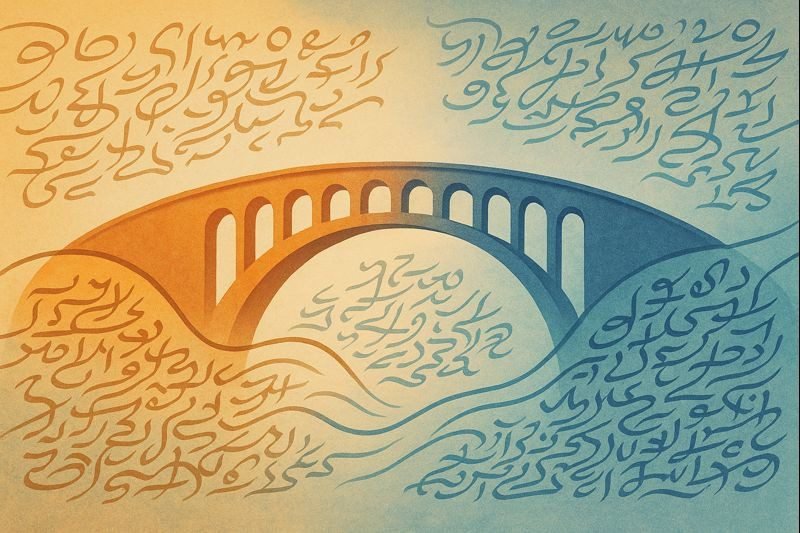
One of the most beautiful—and least discussed—reasons for the importance of poetry is that it allows us to connect with other cultures without trying to make them "like us ." Unlike other forms of discourse (more explanatory, more rational, or more academic), poetry carries a special weight: it not only communicates ideas, it also conveys sensitivity.
And that sensitivity matters. Because when we learn about another culture only through facts (typical food, dates, customs), we understand a part of it. But when we learn about it through its poetic language—its imagery, its way of naming love, grief, nature, time—we access something deeper: how that culture experiences the world.
Poetry doesn't eliminate differences; on the contrary, it makes them visible and, paradoxically, closer. It teaches us that there are many ways to be alive and that none has a monopoly on what is "human."
Poetic translation: what is gained and what is lost
For a poem to cross borders, it usually needs translation. And here a simple truth emerges: translating poetry is not about transferring words; it's about transferring an experience . Therefore, although translation makes the encounter possible, it also introduces an inevitable tension: something is transformed along the way.
What's interesting is that this transformation isn't all loss. Often, translation is also a gain: it opens doors, creates dialogues, and allows an image born in a distant place to become a companion in another.
But it's important to understand what's happening there, in order to read more intelligently and with less frustration.
Why a poem doesn't "pass" literally
If I translate an instruction literally (“close the door,” “arrive at six”), it works. But a poem doesn't operate with that logic. A poem is made of:
- (rhythm, alliteration, rhyme or lack of rhyme),
- connotations (what a word culturally suggests),
- double meanings,
- silences and cuts,
- internal music.
When you change languages, you also change the sound system, the cultural associations, and the emotional weight of certain words. Therefore, poetic translation often chooses between priorities: sometimes it preserves the meaning, sometimes it preserves the rhythm, sometimes it seeks an emotional equivalent.
In practice, reading translated poetry means accepting this: you're not reading "the same poem" in a technical sense, but you can still experience something very close to the original . The key isn't capturing every nuance as if it were a museum piece; the key is allowing for the encounter.
And here's something I think is important: that imperfection is part of the bridge. A bridge is neither the place of origin nor the place of destination; it's the stretch that makes crossing possible.
Cultural diversity: listening to other sensibilities
Poetry is a powerful reminder that reality isn't perceived the same way everywhere. What one culture considers "beautiful," "tragic," "sacred," "vulgar," or "intimate" can vary enormously. And that variation isn't a problem: it's the point.
When we read poetry from other cultures, we discover that there are universal emotions (love, fear, loss, desire), but there are also cultural nuances that change how we experience them. Even our relationship with nature, the city, our bodies, or our families can appear in a poem in a way that surprises us.
Poetry trains us in a key skill: not to translate the other into our own comfort zone . That is, not to take what is different and turn it into "ah, this is like my own thing." Sometimes it is similar. But other times, what is valuable is precisely what is not similar.
The reader as a cultural traveler
Reading poetry from other cultures is similar to traveling, but with one important difference: on a physical trip you can stay on the surface (taking photos, eating, looking around). On a “poetic journey” you enter into the way of seeing of another person or another symbolic world.
And like any real journey, it requires an attitude:
- Curiosityno hasty trial.
- Patiencebecause not everything is understood instantly.
- Modestybecause you are not the center.
It helps me to think that, as a reader, I don't have to "master" the poem. I don't have to turn it into a correct answer. I have to inhabit it for a while and see what it gives me back: an image, a rhythm, a question, a gentle touch, or a feeling of unease.
That discomfort, in fact, can be a good sign: it means the poem isn't tailored to my needs. It's showing another way of constructing the world.
In that sense, poetry creates cultural bridges in two ways:
- Reconnaissance bridges: “I have felt this too, even if it is in another language.”
- Bridges of difference: “I hadn’t thought of it that way, and now my world map expands.”
Both bridges are necessary. The first unites us; the second educates us.
And here's a very concrete conclusion: poetry is important because it doesn't just connect people; it connects imaginations . It teaches us to live with diversity, to listen more attentively, and to understand that humanity is not uniform. It's a chorus of different voices, and poetry is one of the most direct ways to hear it.
Poetry in everyday life (yes, even outside of books)
When someone tells me, “Poetry has no place in my life,” I almost always understand: many people associate poetry with a school assignment, a difficult book, or a “literary world” that seems foreign to them. But if I look honestly, poetry is closer than it seems. It doesn’t always appear as a “poem,” but it lives in the way we speak, remember, sing, celebrate, say goodbye, and even in how we encourage each other.
The importance of poetry in everyday life lies precisely in this: it doesn't need a stage . It can exist in a notebook, in a song, in a phrase someone said to you that stuck with you, in a small recital, in a quick read on your phone, or in a short text that makes you stop for two seconds and breathe differently.
This isn't about romanticizing life. It's about recognizing that poetry is a practice: a way of inhabiting language with greater attention and truth. And that practice can be integrated into daily life without becoming solemn.
In school and learning
In the world of education, poetry often faces a contradiction: it is powerful, yet sometimes taught in a way that makes it tedious. When poetry is reduced to "looking for literary devices" or guessing "what the author meant," it loses its most valuable effect: the encounter.
Even so, when done well, poetry in schools is an incredible tool, because it teaches three things that are rarely practiced patiently:
- deep reading (not just “understand the idea”),
- sensitivity to language (sound, rhythm, nuance),
- emotional expression without falling into the obvious.
Poetry can also help students who feel they “don’t write well,” because it shows them that writing is not just about writing “correctly”: it’s about finding a voice, a rhythm, and a way of seeing.
Poetry to develop critical reading (without killing the pleasure)
If I had to propose a simple rule for working with poetry in educational contexts, it would be this: pleasure first, then analysis . Analysis is useful, of course, but it should come after the text has done something for the reader.
A practical approach that works (and avoids frustration) is:
- First: "How did it make you feel?" (without justifying yet).
- After: “What image stayed with you?”
- Only then: “What resources do you see and how do they support that effect?”
Thus, critical reading arises from real experience, not obligation. And when poetry becomes experience, learning becomes more human and more lasting.
In community: recitals, slam, orality
Something we sometimes forget is that poetry wasn't born to be read in silence. It was often born as a voice: spoken, sung, shared. That's why, when poetry appears in community—at a recital, an open mic, a slam, an intimate reading—a different phenomenon occurs: the poem ceases to be a "text" and becomes an act.
In a community, poetry not only communicates; it also creates bonds. It unites people who may not share a history, but they do share attention. And that collective attention is strange and precious: for a few minutes, an entire group stands still, listening to the same thing, breathing in sync with someone else's rhythm.
Furthermore, spoken poetry breaks down another common barrier: “I don’t understand poems.” Often, the difficulty lies not in the poem itself, but in the format. When a poem is heard, its meaning enters through a different channel: through the body, the rhythm, the intention of the voice.
The voice and the audience: when the poem happens
Some poems feel "cold" on the page but become intense when read aloud. And some poems change completely when read aloud, because tone, pauses, and breath reveal what the paper doesn't.
In a recital or slam, the audience also participates, even if they don't speak. They participate by:
- the silence (that sustains),
- laughter (when there is humor),
- the gesture (when something touches),
- applause (as a bodily response).
This dynamic makes poetry something alive. And in a world where many experiences are solitary, communal poetry serves as a reminder: we are not alone in what we feel.
In the digital realm: networks, audio, short formats
Poetry has also found a home in the digital realm. And here there are two typical reactions: either it's celebrated as democratization (“how wonderful that poetry is reaching more people”), or it's criticized as superficiality (“that's not poetry”). I prefer to look at it with balance: the format changes, and that brings both opportunities and risks.
On social media, poetry tends to be shorter, more direct, more easily digestible. This can open doors: someone who would never buy a book of poems might stumble upon a short text and feel a connection. But it can also push people toward the easy way out: pretty phrases that sound good but lack depth.
What's interesting is that digital isn't just text. Today, much poetry lives in:
- audio (readings, podcasts, reels),
- video (performance poetry),
- image (visual poetry),
- community (book clubs, online workshops).
And that broadens access: poetry no longer depends on an editorial or academic circuit to circulate.
How the reading changes when the screen changes
Reading on screen alters our attention span: we tend to read faster and with less pausing. Therefore, if someone wants to incorporate poetry into their digital life without it becoming just "more content," there are two simple habits that can help:
- Save the poem you liked and return to it later (rereading).
- Read it aloud even if you saw it in a post.
That minimal gesture changes everything: it transforms the poem into an experience and not just a consumption.
An honest thought is also worth considering: not all digital poetry has to be profound to be useful. Sometimes a short line acts as a spark: it opens a door and pushes you to explore further. The problem isn't the format; the problem is remaining only on the surface.
In short, poetry is in everyday life because everyday life is made of language. And when language becomes more conscious, more sensitive, and more precise, life also becomes a little more livable. That is one of the less grandiose—but more real—importances of poetry: it seeps into the daily and improves it from within.
How to start reading poetry without getting frustrated (mini practical guide)
If you've ever tried reading poetry and been left with the feeling of "I don't understand anything," I have good news: that happens to a lot of people, and it doesn't mean you're "not cut out for this." Often the problem isn't poetry itself; it's our approach. We were taught to read looking for the right answer, as if the poem were a riddle. And poetry rarely works that way.
For me, starting to read poetry without getting frustrated is about learning two things at once: lowering expectations (not everything is understood on the first reading) and increasing attention (how it's written does matter). With that balance, the poem stops being a wall and becomes a door.
Choose your first reading wisely.
It's not the same to start with a very obscure poem as with one that's clear, accessible, or has a recognizable theme. Many people "immunize" themselves against poetry by starting with a difficult text at the wrong time.
My recommendation is that your first stage be like learning to swim: you don't start in the open sea. You start where you can breathe.
Length, theme, and difficulty: a simple rule
A practical rule that works:
- Short or medium (to reread without getting tired).
- Related topic (love, loss, city, childhood, nature, identity, fear, routine… whatever you need).
- Relatively direct language (that doesn't force you to consult every verse).
And one important detail: don't choose poetry "because you should," choose it out of genuine curiosity. If a poem starts off well for you, you'll want to continue; if it starts as a punishment, you'll abandon it.
A 4-step method for “entering” a poem
When someone asks me, “How do you read poetry?”, I don’t give a theory: I give a method. Because the method takes you out of the anxiety and puts you into the experience.
The idea is simple: first you feel it, then you think about it, and only then do you explain it (if it needs explaining).
1) First reading (without understanding everything)
Read the entire poem without dwelling too much. As if you were listening to a song for the first time: don't try to analyze every word, just take in the overall impact.
As you read, ask yourself just one thing:
- What kind of weather does it leave? (calm, tension, tenderness, irony, anger, emptiness, nostalgia…)
If you didn't "understand," it doesn't matter yet. At this stage, understanding isn't the goal. The goal is to enter the environment.
2) Underline unusual images and words
On the second reading, use a mental (or physical) pencil. Underline:
- words that are repeated,
- images that catch your eye,
- phrases that make you uncomfortable or surprise you,
- words you wouldn't normally use.
Here you're not interpreting; you're marking signs . The poem almost always tells you where to look: in the repetition, in the strange, in what shines or stings.
A trick that really helps: choose only three brands. Don't underline everything. Three is a perfect number to start with because it forces you to prioritize.
3) What emotion does it leave behind? (before the “theme”)
Now, using your marks, ask a question that completely changes the reading:
- What emotion is this poem trying to hold?
- What is it trying to protect or reveal?
- What's going on beneath the surface of what he's saying?
Don't look for "what it's about" as if it were a school summary. Sometimes the "theme" is obvious, but what's important is the emotional twist: how the voice of the poem experiences it.
Here, too, it's useful to distinguish between emotion and morality. A poem doesn't always teach you "a lesson"; often it simply shows you a human truth without embellishment.
4) Second reading aloud
This step is one of the most effective and, curiously, the most ignored. Read it aloud, even if it's just a whisper. Poetry changes when it's spoken. You'll notice:
- where you breathe,
- where the poem speeds up or cuts off,
- which words carry more weight,
- which verses “hit” because of their rhythm, not their meaning.
Sometimes, what you couldn't understand with your mind becomes clear with your ear. Because a poem is also body: pause, tone, intensity.
Signs that a poem is working for you
Many people believe that a poem "works" only if they understand it perfectly. I don't see it that way. For me, a poem works when it leaves you with something alive, even if you can't explain it exactly.
When a line stays with you
These are clear signs that you've already entered (even if you don't realize it):
- An image stays with you for hours afterward,
- You reread a verse without knowing why,
- you feel that the poem described you better than you could have,
- It makes you want to share it with someone,
- Or, it simply makes you quiet inside (as if the noise were lowered).
And if none of that happens, it's not a tragedy either: not all poems are for every moment. Poetry also has an element of encounter: sometimes it resonates with you, sometimes it doesn't, and both are perfectly fine.
The important thing is not to turn the beginning into an exam. If you approach it with method and curiosity, poetry begins to unfold on its own. And when it unfolds, it becomes a practice that accompanies you: not as a cultural obligation, but as a deeper way of reading the world and of reading yourself.
Typical objections: “I don’t understand poetry” (and what to do)
This is, by far, the phrase I hear most often when someone approaches poetry: “I don’t understand it .” And the first thing I want to say is this: many times, that phrase doesn’t mean “I don’t understand,” but rather “I don’t know how to read it” or “I’m afraid of looking foolish.” Poetry has a reputation for being a closed club, as if you needed a secret key to get in. But in reality, most frustrations with poetry stem from three very common mistakes , and all of them have a solution.
It's not about becoming an expert; it's about adjusting your expectations. Poetry isn't a test. It's a different reading experience. If you change your approach, the outcome changes.
Error 1: looking for “the correct interpretation”
Many people were taught that a poem is like a riddle with a hidden answer: if you don't find it, you've "failed." That approach kills poetry because it puts you in exam mode and takes you out of experience mode.
The truth is that a good poem is usually open : it allows for different readings, nuances, layers. That doesn't mean that "anything goes" (it's not "just anything"); it means that meaning isn't a single, fixed concept.
Possible readings vs. occurrences
There is an important difference between a valid reading and an occurrence:
- Possible reading: It is supported by the text. You can point to words, images, repetitions, or changes in tone that back up what you say.
- Occurrence: It's an idea that popped into your head, but the poem doesn't support it.
How do you know if your reading is possible? A simple rule: if you can cite two or three moments from the poem that support your interpretation, you're on the right track.
And something else: often poetry doesn't seek to have you "decipher" a message, but rather to accompany a process. There are poems that function as atmospheres, as moods, as internal movements. You won't always be able to summarize them in a sentence, and that's okay.
Changing the question helps a lot. Instead of:
- “What did the poem mean?”
Test:
- "What is it making me feel and how is it achieving that?"
- “What images does he insist on showing?”
- "Where does it get intense, where does it become soft, where does it cut off?"
That change gives you back control without turning reading into an exam.
Error 2: reading it as prose
Another source of frustration is trying to read poetry with the same expectations as prose: linearity, explanation, logical continuity. Prose usually moves forward like a highway. Poetry, on the other hand, sometimes moves forward like a path: it stops, veers off, returns, repeats, leaps.
When you try to force a poem to "tell you something" in an orderly fashion, you become frustrated. Because a poem doesn't always want to narrate: it wants to evoke , suggest , create tension , resonate.
Rhythm, cuts, silences
Poetry is made up of formal decisions that are not arbitrary. Line breaks, pauses, spaces, repetitions… are all part of the meaning. In fact, many times the meaning lies more in the form than in the “theme.”
An example of an idea (without needing an actual poem): if the poem cuts off a sentence in the middle, perhaps it wants to create a sense of rupture. If it repeats a word, perhaps it wants to emphasize it as an obsession. If it uses very short sentences, perhaps it wants to sound like labored breathing.
Therefore, when a poem seems "strange," a simple strategy is to stop fighting with the immediate meaning and look at the structure:
- Is anything repeated?
- Does the tone change halfway through the poem?
- Do similar images appear (water, night, metal, house, road)?
- Is there contrast (light/shadow, noise/silence, near/far)?
Sometimes, just by seeing those patterns, the poem opens up.
And here's a piece of advice that really works: don't obsess over understanding every single word . In poetry, it's normal for a word not to be fully understood on the first reading. You don't always need to translate everything into logic. First, let the poem do its work; then you can refine your interpretation.
Error 3: Giving up before the second reading
Poetry is probably the genre that most rewards rereading. And yet, many people abandon it exactly where it should begin: at the first encounter.
It happens to me even with poems I love: the first reading is "what?", the second is "ah...", and the third is "okay, now I get it".
Not because the poem is an elitist puzzle, but because poetry condenses. An idea that in prose would occupy a paragraph, in a poem can be compressed into two lines. Rereading is the natural way to decompress.
Poetry demands rereading (and that's part of the game)
If I had to recommend one minimal habit to eliminate frustration, it would be this:
- Read the entire poem once. without stopping.
- Read it again Marking 3 things: an image, a repeated word, and a verse that "does something" for you.
- Read it out loud (even if it's in a low voice).
In less than two minutes, you radically change the experience. The second reading reveals connections; the spoken word unveils rhythm and intention. And even if you still can't explain everything, you're no longer outside: you're inside.
It also helps to accept a simple truth: there are poems for certain moments . Sometimes you don't connect because you're tired, distracted, or emotionally elsewhere. That's not your fault, nor the poem's. Poetry, like music, depends on your state of mind when you encounter it.
In short: “I don’t understand poetry” is almost never a final diagnosis. It’s a starting point. If you stop looking for a single right answer, if you don’t read it like prose, and if you give yourself permission to reread, poetry becomes much more accessible. And, most importantly, it stops feeling like a chore and starts feeling like what it truly can be: an intense, brief, and powerful way of looking at life.
Frequently Asked Questions about the Importance of Poetry (FAQ)
Why is poetry important in education?
Because it teaches skills that aren't well developed with "utilitarian" texts: deep reading, attention to language, critical thinking, and emotional expression. A poem compels us to notice nuances (tone, rhythm, imagery) and to maintain a critical perspective without giving up at the first "I don't understand." Furthermore, poetry opens up conversations that help develop critical thinking and empathy: it's not just about analyzing literary devices, but about learning to listen to a voice, detect intention, recognize contradictions, and support an interpretation with evidence from the text. In education, this translates into students who read better, write more precisely, and develop the sensitivity to communicate complex ideas without oversimplifying them.
What is the purpose of poetry today, in the digital age?
It serves as a counterweight to speed. In an environment where almost everything is designed for rapid consumption, poetry offers a different rhythm: pause, rereading, attention. It also serves as a space for intimacy: a poem can say in 30 seconds what we can't explain in a long conversation. In the digital realm, poetry also circulates as audio, video, and short texts, increasing its accessibility. The challenge is not to settle for just "pretty phrases" but to seek depth when we need it. In short: today, poetry helps us recover humanity in language, refine our emotions, and think more clearly amidst the noise.
Does poetry help express emotions?
Yes, and not only because it "speaks of feelings," but because it offers concrete tools for naming them. Metaphor, imagery, and rhythm allow us to express what everyday language leaves unexplained or blurred. Saying "it hurts" is real, but sometimes insufficient; poetry reveals nuances, and those nuances help us understand each other. Furthermore, poetry allows us to share emotions without having to justify them like a report: it accompanies you without demanding that you "resolve" what you feel. That's why many people find in poetry a way to make sense of grief, anxiety, love, or hope: not because the poem cures, but because it makes what's inside more bearable.
What difference does poetry make compared to prose?
Prose typically organizes ideas linearly: it explains, develops, and concludes. Poetry, on the other hand, can condense an experience into a few lines and activate meaning through form: rhythm, silences, breaks, repetitions, and imagery. In poetry, it's not just "what is said" that matters, but "how it sounds" and "what it evokes." That's why a poem can have such a powerful impact without being easily summarized. This difference offers something valuable: poetry doesn't always seek to convince you; it seeks to make you see, feel, or think from a different perspective. And that perspective, sometimes, changes things more than a lengthy explanation.
How can I "understand" a poem without studying literature?
Changing the focus. Instead of searching for “the correct interpretation,” first look for the effect: What atmosphere does it create? What image is emphasized? What word is repeated? Where does the tone shift? Then reread (ideally aloud) and construct an interpretation that you can support with two or three passages from the text. You don't need advanced theory for this; you need method and patience. It also helps to choose accessible poems to begin with: short, with relatable themes and relatively direct language. Over time, your “ear” will train: you'll begin to notice patterns and enjoy ambiguity without anxiety. Understanding poetry isn't about deciphering a secret code: it's about practicing a different kind of attention.
Is poetry only for romantics?
No. Poetry can be about love, of course, but it can also be political, ironic, everyday, dark, humorous, critical, spiritual, urban, intimate, experimental. The stereotype of the “romantic” exists because love is a universal theme, but reducing poetry to that is like reducing cinema to romantic comedies. There is poetry that unsettles, poetry that denounces, poetry that plays with language, poetry that portrays routine, poetry that speaks of identity, the body, work, the city, memory. If someone says, “Poetry isn’t for me,” often they simply haven’t found the kind of poetry that resonates with their perspective and their current circumstances.
What types of poetry connect best with beginners?
It often works to start with poetry that uses clear language, powerful imagery, and is short or medium in length. Free verse can be a good entry point because it reduces the pressure of "understanding the meter," although the musicality is still present. It also helps to choose poems with a recognizable theme (family, city, childhood, loss, nature, identity) and an approachable voice. Another very effective option is to listen to poetry read aloud (recorded readings or recitals), because the rhythm guides the meaning. The important thing is not to start with the most obscure poems if you're feeling apprehensive: first, look for a poem that makes you feel something, even if it's small. The initial emotional connection is the best "teacher."
How to bring poetry closer to children and young people?
With playfulness, rhythm, and freedom. Children and young people benefit from poetry that is heard: rhymes, repetitions, songs, riddles, verses with humor and musicality. It also works when it connects with what they already consume: music, rap, performance art, short stories, themes of identity, friendships, injustices, and real desires and fears. A common mistake is to impose analysis before enjoyment; it's better to do the opposite: first read, listen, recite, write without pressure, and only then discuss what the text evoked. Furthermore, giving space to one's own writing (even if it's simple) strengthens the relationship with language: when someone writes a verse and recognizes themselves in it, poetry ceases to be "material" and becomes experience.
Conclusion: Poetry as a practice of humanity
After everything we've seen, for me the importance of poetry boils down to something very simple: poetry gives us back depth . Not because it's "superior" to other art forms, nor because we have to understand all of it for it to work, but because it teaches us to be more present in what we feel, what we say, and what we experience.
Poetry is not a cultural luxury. It is a way of caring for language, and when we care for language, we also care for our inner life. Because our inner life exists even if we don't name it; the difference is that, when we don't name it, it governs us from the shadows. Poetry often lights a small candle: not to explain the world like a manual, but to make it habitable.
What changes when poetry returns to your life
When poetry enters (or returns) to your life, something dramatic doesn't necessarily happen. Sometimes the change is subtle, but real:
- You start to feel more preciselybecause you find words for nuances that were previously just noise.
- You learn to read more slowly and with more attention, like someone learning to truly listen.
- You become more capable of sustaining complexity without needing to reduce it to a simple phrase.
- You realize you're not alone: someone, somewhere, at another time, also felt something similar and wrote it down.
- You connect with culture in a more intimate way, because poetry holds the emotional memory of humanity.
And the best part is, you don't need to turn it into a rigid routine. Sometimes a simple habit is enough: reading a poem a week, rereading a verse that resonates with you, listening to a reading aloud, jotting down a couple of lines in a notebook when something strikes you. Poetry doesn't demand perfection: it demands presence.
A final thought to remember
If you take away just one idea from this article, let it be this:
Poetry is not meant to be "understood" like an exam; it is meant to help you understand yourself a little better through language.
As long as there is someone capable of feeling something difficult to express—love, loss, fear, hope, gratitude, anger, wonder—there will continue to be a reason for poetry. And that reason never goes out of style: it is the same reason we search for words when the heart falls short.
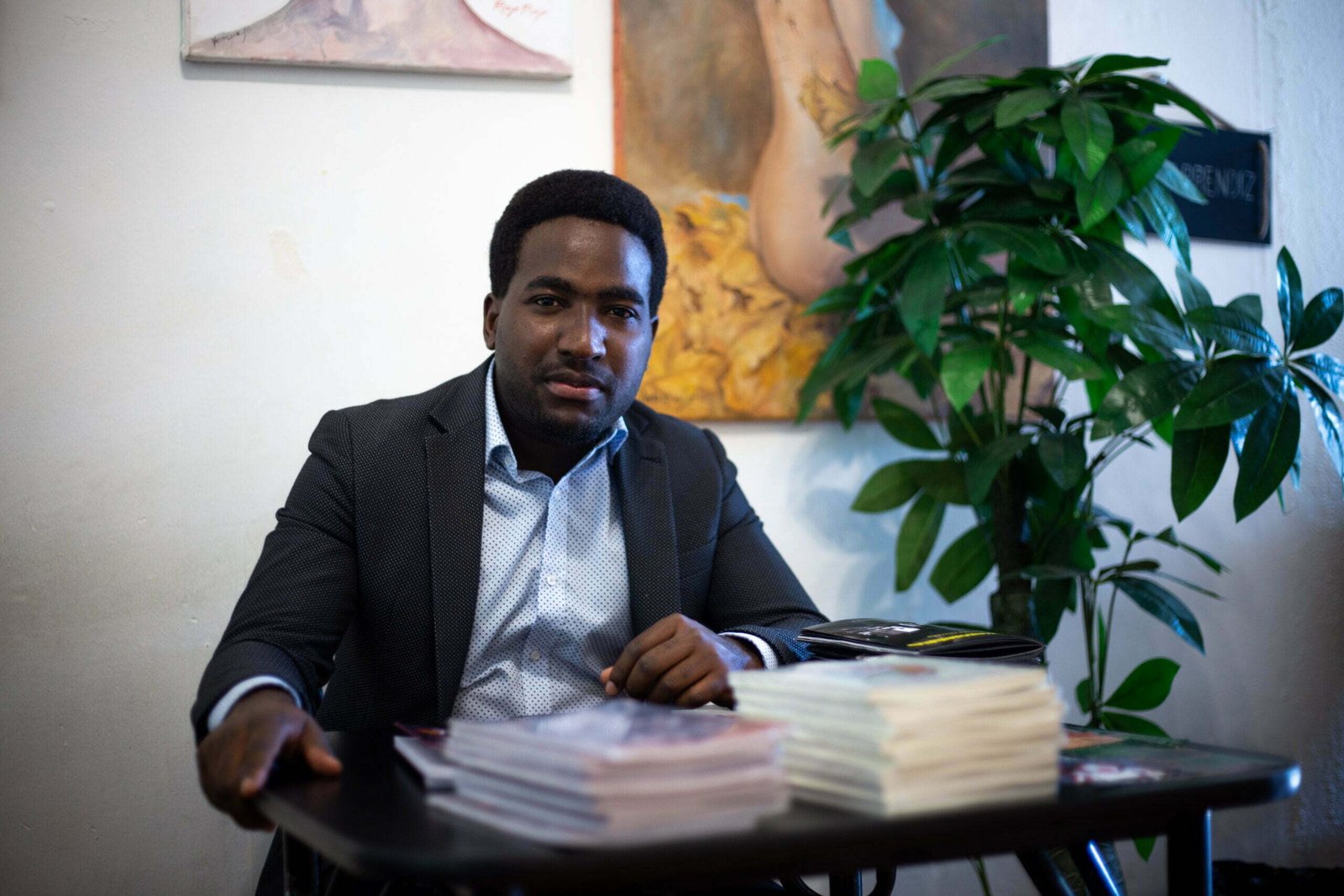
I am Stevenson Jacques, originally from Haiti, a professional electrician , theater actor, novelist, poet, writer, art lover, known as "Steve the Poet".
In 2008 I began to work more in the world of art, writing and theater; I was part of several theater companies.
Since 2014 I have been a member of “Tanbou Literè”; a group of dynamic young people who love art and literature.
I published in the anthology "Champurria" in 2018, and in the literary magazine "Desvanecimiento" in 2022. I have participated in several writing workshops and literary courses.
I am a member of a very dynamic and committed group of Haitian writers of my generation, “REK”; They are activist writers in defense and appreciation of the Haitian Kreyòl language.
After many years of publishing sporadically, I decided to publish my first bilingual poetry collection, "flor de tumba – Flè kav," along with its accompanying audiobook, in January 2023. In the same year, 2023, I published a novel in Creole, "Depi nan benbo," which I had been working on for over six years.