
15 of the most famous Chilean poets: prominent poets and Nobel Prize winners you should know
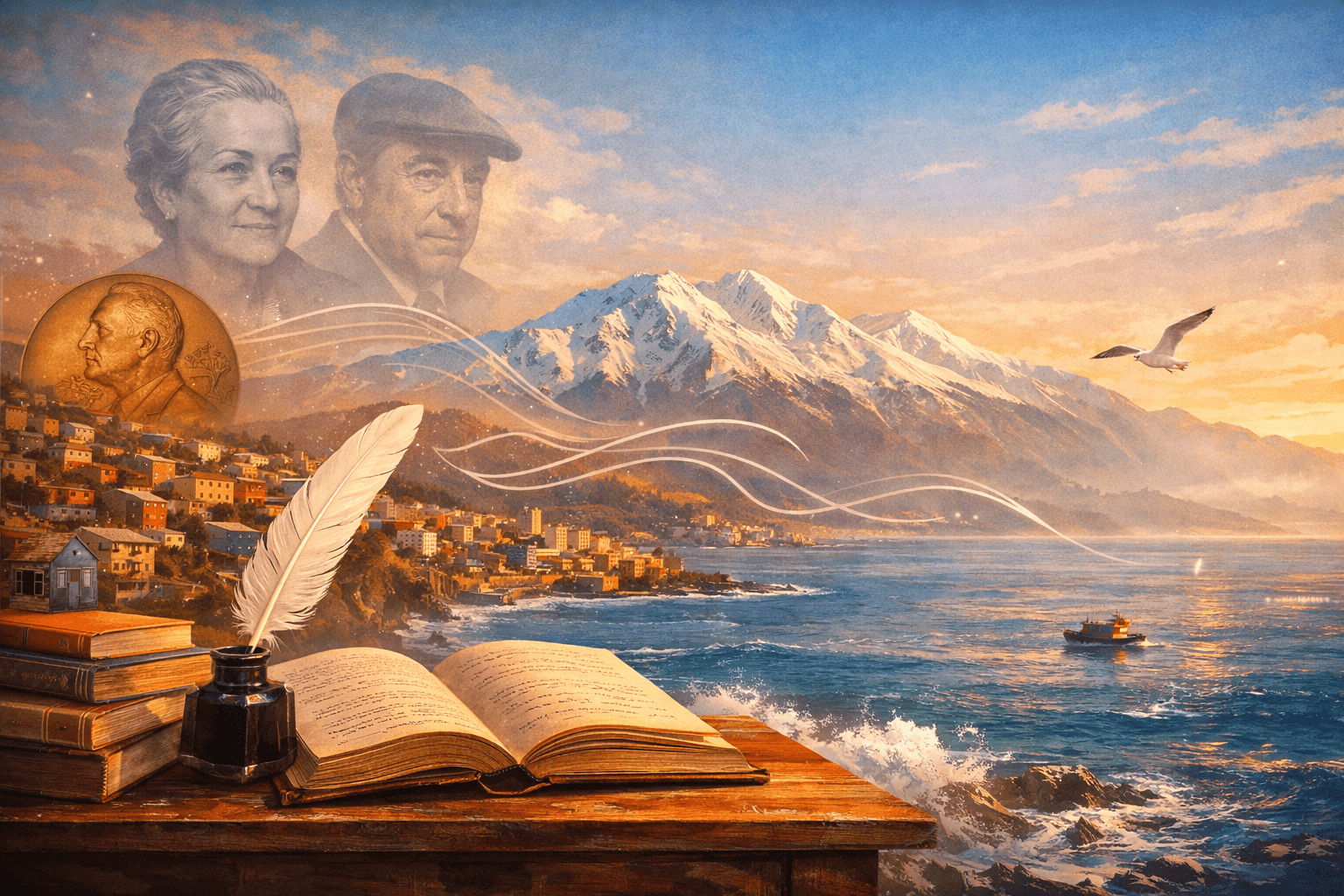
Chile is a "land of poets" thanks to a vibrant tradition: Nobel Prize winners, avant-garde movements, anti-poetry, and contemporary voices. Here are 15 names and where to start reading them.
Chile, land of poets
Chile earned the name "land of poets" because poetry has not been a mere cultural embellishment: it has been a form of identity. In few countries has the poetic word carried such public weight, such continuity, and such a capacity to renew itself without losing intensity.
Several traditions coexist here, explaining this power: a lyrical and universal poetry (capable of moving any reader), an avant-garde that pushed the language to its limits, a popular and ironic voice that broke the rules, and a poetry of memory that transformed historical pain into language. This is why Chilean poetry can be loving and political, intimate and collective, luminous and fierce.
This list brings together 15 names that help you understand this landscape: the essential ones, those who changed the way Chilean poetry is written, those who gave new voices to the country, and those who continue to influence it today. If you want to start reading Chilean poetry on the right foot, this list will clear the path for you.
Chile's two Nobel Prize winners (essential)
Gabriela Mistral (Nobel)
The first great universal voice of Chilean poetry: direct emotion, human pulse, and a writing style that speaks of childhood, love, loss, and dignity without artifice. Her work remains a perfect gateway to understanding Chilean sensibility.
Works to begin: Bleakness · Tenderness.
Pablo Neruda (Nobel)
The most widely read Chilean poet in the world: a voice capable of moving from love to history, from the everyday to the monumental, with memorable images and an unmistakable verbal energy.
Works to begin: Twenty love poems and a desperate song · Residence on earth · General Song.
15 famous Chilean poets (with works to get you started)
Gabriela Mistral — A lyrical and human voice, capable of uniting tenderness, loss and dignity without embellishment.
Works to begin: Bleakness · Tenderness.
Pablo Neruda — The most widely read Chilean poet: love, nature and history with memorable images and verbal energy.
Works to begin: Twenty love poems and a desperate song · Residence on earth · General Song.
Vicente Huidobro — Pure avant-garde: it pushed language to open up a new idea of the poetic.
Works to begin: Altazor · Sky tremor · Manifestos.
Paul of Rocha — Creative power and excess: a major voice of the Latin American avant-gardes.
Works to begin: The moans · anthologies/selections.
Nicanor Parra — Antipoetry: irony, humor and edge; it changed the rules without asking permission.
Works to begin: Poems and antipoems · Artifacts · Sermons and preachings of the Christ of Elqui.
Gonzalo Rojas — Sensuality and thought: an intense, direct rhythm, with mystery and body.
Works to begin: Against death · Dark.
Enrique Lihn — Urban and existential lucidity: a critical, modern, uncomfortable writing in the best sense.
Works to begin: The Dark Room · The little tune of the poor spheres.
Jorge Teillier — Nostalgia and the provinces: the beauty of the everyday turned into memory and symbol.
Works to begin: The lost domains · For angels and sparrows · Chronicle of the Stranger.
Raul Zurita — Poetry as country and wound: landscape, history and resistance transformed into language.
Works to begin: Purgatorio · Anteparadise · I sing to his lost love.
Carmen Berenguer — Political and bodily writing: street, memory and language in constant tension.
Works to begin: Bobby Sands collapses on the wall · Traces of the century · You were born painted.
Cecilia Vicuña — Expanded Poetry: Word, Performance, Nature and Contemporary Poetic Thought.
Works to begin: Words · The precarious, the song and the ritual · selections.
Elicura Chihuailaf — Fundamental Mapuche voice: memory, orality, territory and cultural dialogue.
Works to begin: Of blue dreams and counter-dreams · Confidential message to the Chileans · In the land of memory.
Elvira Hernandez — One of the most unique voices in contemporary Chilean poetry; identity and country without rhetoric.
Works to begin: The flag of Chile · Santiago Waria · Travel letters.
Gonzalo Millán — Precision and impact: testimonial poetry with a cold and powerful gaze on recent history.
Works to begin: The city · Life Insurance · Virus.
Stella Díaz Varín — Intensity and myth: a fierce, lyrical and radical voice, more widely read today than ever before.
Works to begin: Reason for my being · Symphony of the Fossil Man · The predictable gifts.
8–12 Chilean poetry books to get started (quick list)
- Gabriela Mistral — Bleakness
- Gabriela Mistral — Tenderness
- Pablo Neruda — Twenty love poems and a desperate song
- Pablo Neruda — Residence on earth
- Vicente Huidobro — Altazor
- Nicanor Parra — Poems and antipoems
- Pablo de Rokha — The moans
- Gonzalo Rojas — Against death
- Enrique Lihn — The Dark Room
- Jorge Teillier — The lost domains
- Raúl Zurita — Anteparadise
- Elicura Chihuailaf — Of blue dreams and counter-dreams
7 reasons why Chile is said to be the land of poets
- Two Nobel Prizes in Literature Born in Chile: Gabriela Mistral and Pablo Neruda.
- A vanguard with global reach, with figures who broke the mold and pushed the language (Huidobro, De Rokha).
- The antipoetry of Nicanor Parra, which forever changed the way poetry was written and read in Spanish.
- Poetry with public weight, capable of entering into social conversation without losing literary force (Rojas, Lihn, Zurita).
- A tradition that is renewed, with powerful and diverse contemporary voices (Berenguer, Vicuña, Hernández).
- Presence of living indigenous poetry, which expands the language and memory of the country (Elicura Chihuailaf).
- A strong link between landscape and imaginationwhere sea, mountain range, city and desert become language, rhythm and vision.
Chile not only produced great names: it produced different ways of understanding poetry , from classical beauty to rupture, from irony to memory.
Poetry and memory: dictatorship, resistance and new voices
In Chile, poetry didn't just sing of love or landscapes; it also bore the weight of history when history became unbearable. After the 1973 coup and during the dictatorship, many poets wrote from a place of loss, fear, censorship, and exile. In that context, the poem became a refuge, a form of protest, and an emotional archive of a fractured country.
Raúl Zurita is one of the central figures of that period and what followed: his work transforms collective pain into image and territory, making the Chilean landscape—desert, mountains, sea—function as a living memory. In a different vein, Carmen Berenguer works with the street, the body, and the city: her language is more direct, more electric, as if reality were striking the syntax itself.
There are also poetic voices that act as intimate documents of their time. Gonzalo Millán, with his stark precision, leaves behind poems that seem like records: a way of looking at history without melodrama, but also without anesthesia. And in contemporary poetry, voices like Elvira Hernández uphold a style that reflects on the country without rhetoric, using recognizable symbols and a lucidity that unsettles.
What is most remarkable is that this tradition did not remain frozen in the past: it expanded. Today, political memory, linguistic exploration, feminisms, Indigenous poetry, and performative writing coexist. That is why Chilean poetry remains alive: because it has never stopped responding to its time.
Frequently asked questions about Chilean poets
The names that appear most frequently, influenced by and influenced by literature, are Gabriela Mistral, Pablo Neruda, Vicente Huidobro, and Nicanor Parra . A key constellation of figures has grown up around them: Gonzalo Rojas, Enrique Lihn, Jorge Teillier, Raúl Zurita , among others.
Chile has two Nobel Prizes for Literature directly linked to poetry: Gabriela Mistral (1945) and Pablo Neruda (1971).
If you want a clear and emotional entrance: Mistral (Tenderness) o Neruda (Twenty love poems…).
If you want something short, ironic, and modern: Parra (Poems and antipoems).
If you're drawn to the avant-garde: Huidobro (Altazor).
It depends on the criteria, but Neruda is usually considered the leader due to his global reach, while Parra is crucial for having changed the way poetry is written and read in Spanish. Huidobro is key for his avant-garde break with tradition.
For contemporary poetry with weight and originality: Raúl Zurita, Elvira Hernández, Cecilia Vicuña, Carmen Berenguer, and Elicura Chihuailaf . Their works connect memory, territory, language, and the present.
Closing
Chilean poetry is not a museum: it's a living tradition. These 15 names contain love and rage, play and thought, avant-garde and memory; they represent both the country and the world. If you choose one and truly read it, sooner or later you'll want to explore the others.
Who would you add to this list? If you'd like, I can prepare an alternative version with 15 Chilean poets of the 21st century or a "one-week start" list with 7 readings ordered from most accessible to most challenging.
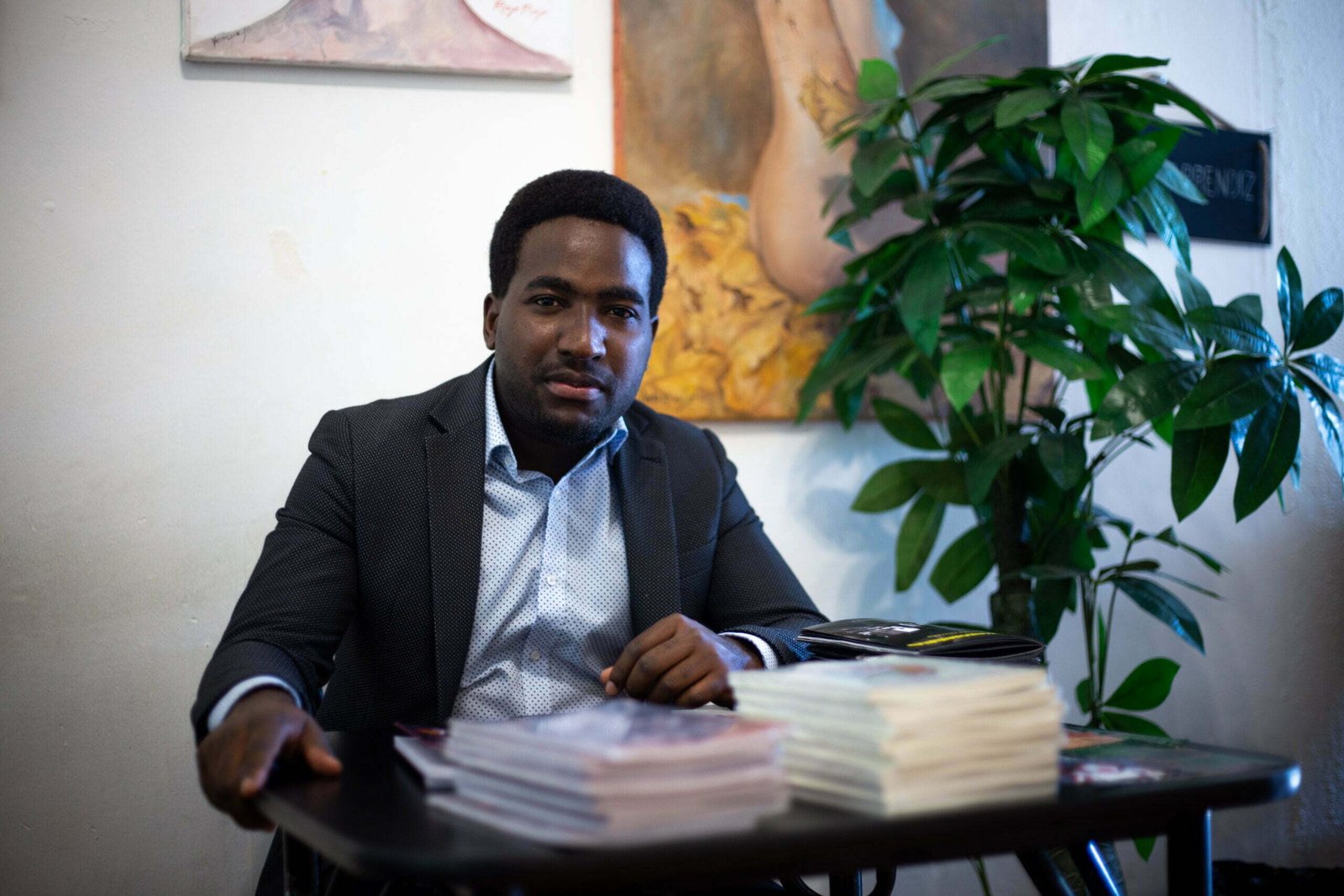
I am Stevenson Jacques, originally from Haiti, a professional electrician , theater actor, novelist, poet, writer, art lover, known as "Steve the Poet".
In 2008 I began to work more in the world of art, writing and theater; I was part of several theater companies.
Since 2014 I have been a member of “Tanbou Literè”; a group of dynamic young people who love art and literature.
I published in the anthology "Champurria" in 2018, and in the literary magazine "Desvanecimiento" in 2022. I have participated in several writing workshops and literary courses.
I am a member of a very dynamic and committed group of Haitian writers of my generation, “REK”; They are activist writers in defense and appreciation of the Haitian Kreyòl language.
After many years of publishing sporadically, I decided to publish my first bilingual poetry collection, "flor de tumba – Flè kav," along with its accompanying audiobook, in January 2023. In the same year, 2023, I published a novel in Creole, "Depi nan benbo," which I had been working on for over six years.