
Poems to help couples reconcile: sincere verses to start talking again, rebuild trust, and nurture love

Narrative opening
Reconciliation isn't about erasing the past; it's about setting the table so we can talk again. I've seen loves melt in a sincere embrace, and I've seen others patiently rebuild themselves: word by word, gesture by gesture, day by day. I, Steve the Poet, write from that place: the place of one who stays to mend even when pride urges him to run away. If you accept, let these verses be keys , not shoves.
When you feel that it's time to clearly acknowledge the fault, there lives your travel companion: Poems to ask forgiveness from a loved one.
Short poems to break the ice
Before sending or reading them, think of a small, realistic agreement you can fulfill today. These texts are intentionally brief: they open the door without being overbearing.
- "Bridge"
I'm not here to win,
I'm here to lay the boards one by one.
this bridge between the two. - "Truce"
Let's be silent for a minute.
Perhaps love will speak
better than us. - "On time"
I cannot undo the damage,
But I can get there on time
from today. - "Home"
I don't promise you fires,
I promise you slow cooking:
to rebuild trust. - “Two chairs”
I leave my defense at the door.
Shall we sit down and listen to each other?
as if it were the first time? - "Inventory"
I bring truth,
I bring patience,
I'm eager to learn. - "Beat"
If he raises his voice,
Let's bring the world down
until you hear the heartbeat. - “Low light”
I don't want to be right,
I want to understand you.
Can I borrow your version of the night? - "Hands"
My hand doesn't know how to push.
if she holds yours.
Shall we try? - "To return"
Going back is not retracing your steps,
it's learning the way
that we didn't see.
“In the theater I understood that a well-placed pause saves a scene. In love, that pause is called respect: listening before explaining.”
If, after this first step, you feel you need encouragement to sustain the conversation on difficult days, you can consider a serene reading: Poems to give encouragement in difficult times.
Medium-length poems for specific situations
Let's try again (a pact that is understood)
Sometimes reconciliation isn't an epic embrace but a clear agreement : what we'll take care of, how we'll let each other know when something hurts, what we'll do if the storm returns. This poem proposes that framework without solemnity.
“Pact of the possible”
Let's not promise flawless skies:
Let's promise open windows.
If it rains, we'll only partially close.
and we let the air circulate.
If we raise our voices, we bring the world down.
until the heart speaks clearly.
I bring the truth that I must,
You bring your whole version.
If we get lost, the table,
two glasses of water, your name:
That's the meeting point.
Let's try again, but properly:
with plenty of time and small pride.
If you need to differentiate this pact from a one-off apology , then Poems to ask forgiveness from a loved one awaits you.
New agreements (habits and boundaries that protect)
Reconciliation also means rearranging habits : schedules, phone numbers, ways of arguing, times of silence. This poem brings those decisions down to earth.
“Manual of what we take care of”
Don't ask me for bright promises:
Let's ask for habits.
To sleep without war,
wake up without any old worries,
name the wound when it is small.
Let's not let the phone take over the table,
Let's not let haste steal Sunday from us,
Let anger wait behind the door
while we learn the pause.
It's not perfect poetry:
It's what holds the house together.
I sign with this simple ink:
my attention to you, every day.
“In the theater I learned that the scene is saved with clear markers : where to enter, when to be silent. In love, those markers are habits that protect us.”
Jealousy and transparency (shedding light without invading)
Trust isn't demanded: it's built with transparency . Ask questions, show things, give warnings; and when something makes you uncomfortable, say it clearly and in time.
“Light without noise”
I'm not bringing an interrogation,
I bring lamps.
If a shadow troubles us,
We looked at it together.
Not to control your pace,
but to walk with mine.
If I ask you for an explanation,
Let it be a door, not a lock.
If I offer you my phone,
It's not penance: it's trust.
Let the light not blind us
nor let the secret make us sick.
Let's learn the right amount of brightness.
When the wound was jealousy + assumptions , you can add reviewing Poems to ask forgiveness from a loved one and, later, embrace gratitude with Poems of gratitude in a couple.
Distance and presence (fewer hours, higher quality)
Not all couples have all the time in the world, but they can make meaningful time together . This poem proposes genuine presence, even when schedules are tight.
“To be is a whole verb”
I'm coming with only a few hours.
and a lot of listening.
I want to be without a screen,
with the table messy
and laughter at hand.
If the day weighed you down,
I'll load it up a little.
If mine got cloudy,
I trust in your patience.
Presence is not a clock,
It is a gaze that sustains.
Let that be enough for us.
to return.
Personal insertion (Steve the Poet): “Migrating taught me that being present isn't always about arriving early: sometimes it's about arriving whole, with both feet and an open ear.”
Returning to tenderness (gestures that re-enchant)
Reconciliation brings back the tone of tenderness : simple caresses, shared humor, a language that does not hurt.
“Bread tongue”
Let's speak in the language of bread:
warm, simple, homey.
Let's leave the sharp phrases aside
on the cutting board.
Let the dishes laugh at our clumsiness,
The cups sing as they clink.
If pride returns,
We invite you to sit down
Now eat calmly
until it softens.
I want tenderness
We will return to our language.
When tenderness takes root and the desire to celebrate what we do is born, let's save the route for later: Poems of gratitude for couples.
And if you want to explore more perspectives on love, there's always the main house: Poems of love and romance.
Prose letter sketch (for WhatsApp or reading at the table)
I want this note to be a door I don't push open. I'm not offering shortcuts or speeches: I'm bringing the whole truth about what I did and what I want to protect. It hurts me to have hurt you, and I understand you need time; if it helps, I can start by listening without interrupting. Afterward, I'd like to tell you what I'm changing: how I'll lower my voice when the storm rises, how we'll let each other know when something hurts, how I'll protect our time together.
I'm not asking you to forget, I'm asking your permission to learn with you. If you decide to open up, I bring water, calm, and this table. I promise my promises will become habits: small, visible, repeated. And if you can't read me today, that's okay; I'll stay here, with the door ajar and my pride outside. I want to come back, but properly.
And if, as you move forward, you need a brighter tone to avoid losing momentum, save Poems of confidence and optimism.
Micro-poems to send without noise
— “I’m not here to win: I’m here to understand you.”
— “I can lower my voice if you lend me your version of the day.”
— “Let’s make pride a guest, not the master of the table.”
— “I promise small habits: truth, patience, timely warning.”
— “If you stay, I’ll learn how to stay okay.”
If you need to heal from hurtful words before taking this step, Poems to Ask Forgiveness from a Loved One (Published) can help. When things are clearer, it will be natural to celebrate what you have with Poems of Gratitude for Couples.
A brief guide to delivering reconciliation (without sabotaging it)
- Ask for the moment. “Is this a good time to talk?” The other person’s willingness is the first agreement.
- Name the objective. “I want us to reconcile, not argue about who is right.” He puts the relationship above the argument.
- It brings a fact and a change. Concrete fact + verifiable adjustment: “When I raise my voice, I stop and ask for a pause.”
- Agree on signals. A key word to stop, a gesture to ask for time. Avoid falling back into the spiral.
- Define how they fight. No insults, sarcasm, or threats. Disagreeing isn't about hurting each other.
- Protect the good times. Dinners without screens, short outings, a weekly walk. Connections are sustained through everyday life.
- Respect the limits. If you can't do it today, don't insist. Reconciliation happens at its own pace.
- Close carefully. Thank them for the conversation and make the next step clear (small and realistic).
Personal insertion (Steve the Poet): “In the theater I learned that a scene breathes when no one tries to steal it. Reconciliation is that: leaving room for the story of two to speak again.”
Frequently asked questions (FAQ)
When both can listen without constantly defending themselves and there is a willingness to change habits, not just words.
Use the agreed-upon signal to stop, resume when the tension eases, and record the missing agreement in writing.
If the wound is fresh, be brief and sincere. When the situation improves, write a prose letter with concrete changes.
With consistent repetition : give notice, keep to schedules, tell the whole truth, ask for a pause before hurting someone's feelings. Trust is rebuilt through habit.
Reconciliation takes two . Honor the decision, take care of your process, and avoid pressuring; insisting can break what little respect remains.
Long closing poem — “The table and the key”
I'm not offering you a perfect ending,
I offer you an open door.
I don't offer you brilliant speeches,
I offer you the voice that learns to lower.
I bring a table: simple bread,
two glasses of water and time.
I bring the key to my defense
to leave it in your hand.
If night returns, we light lamps;
If his pride returns, we'll sit him down to eat.
until it softens.
If fear returns, we'll tell you the whole truth.
I don't swear it won't rain,
I swear we'll be inside,
taking care of the leaks
until the roof trusts us again.
If you stay, we'll learn the language of care;
If you leave, I will be grateful for what you taught me to see.
But today, if you open,
Let the fresh air enter with you:
I'm staying to live there.
Final insertion (Steve the Poet): “Reconciling is not going back; it's moving forward differently . I'm joining you on that path, step by step.”
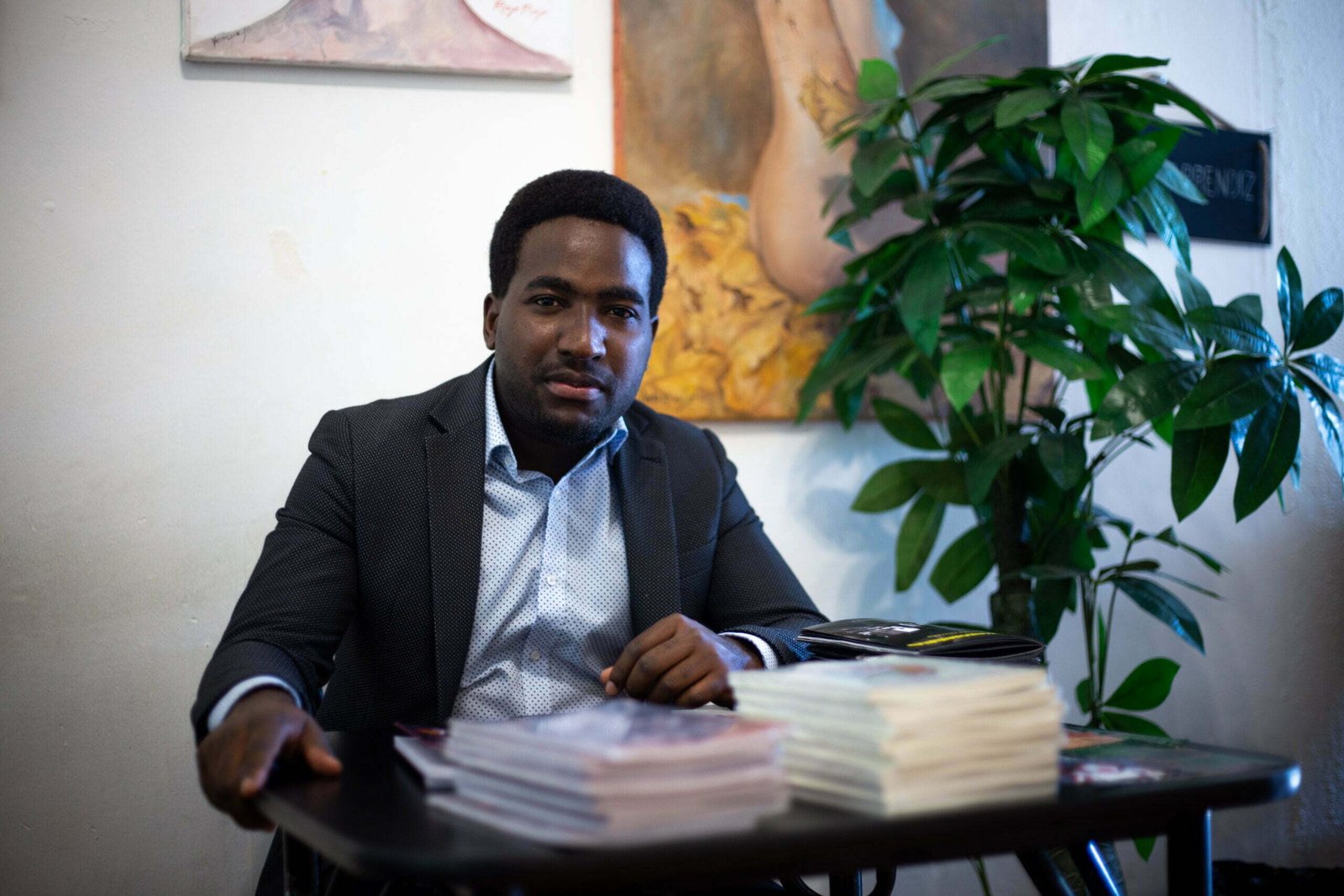
I am Stevenson Jacques, originally from Haiti, a professional electrician , theater actor, novelist, poet, writer, art lover, known as "Steve the Poet".
In 2008 I began to work more in the world of art, writing and theater; I was part of several theater companies.
Since 2014 I have been a member of “Tanbou Literè”; a group of dynamic young people who love art and literature.
I published in the anthology "Champurria" in 2018, and in the literary magazine "Desvanecimiento" in 2022. I have participated in several writing workshops and literary courses.
I am a member of a very dynamic and committed group of Haitian writers of my generation, “REK”; They are activist writers in defense and appreciation of the Haitian Kreyòl language.
After many years of publishing sporadically, I decided to publish my first bilingual poetry collection, "flor de tumba – Flè kav," along with its accompanying audiobook, in January 2023. In the same year, 2023, I published a novel in Creole, "Depi nan benbo," which I had been working on for over six years.