
Poems for the best dad in the world from his son
Sometimes a son feels immense pride in his father, but can't find a natural way to express it. That's why I wrote these poems for the best dad in the world from his son : original tributes that speak of admiration, respect, and the real impact a father has on the life of someone who grew up watching him.

When I say "the best dad in the world," I'm not talking about a perfect man or a competition between fathers. I'm talking about that father whose words, presence, effort, or the way he gets back up every day has given his son personal reasons to be proud.
You can copy the poem that best matches your story, read it aloud, send it as a voice note, or accompany it with a photograph. My recommendation is to change at least one scene so that Dad can recognize himself in your words.
For a child, the best dad in the world isn't the one who never makes mistakes. It's the one whose story has given them real reasons to admire him.
Steve the Poet
Poems for the best dad in the world from his son, ready to dedicate
These first poems are a way to tell Dad how much he means to his child. They don't need a special occasion: they can be given during a family gathering, along with a gift, or simply on a day when you no longer want to keep your feelings bottled up.
Poems to tell dad how much he means to his son
To me, you are the best dad
To me, you are the best, not because you never failed, but because with every fall you found a way to get back up. Because you kept your word when it was hardest to keep it, and because when you saw me confused, you didn't choose to abandon me. I don't need to compare you to others: your place in my story was born. I am proud, Dad, to carry you in my memory.
Proud to be your son
I'm proud to be your son, to know your scars, to know how many times you fought without ever appearing invincible. You taught me that being strong isn't about not being afraid, but about persevering when you don't know what to do. Today I want you to remember that: your path spoke for you. Much of what I admire lives on in me.
Your story deserves my tribute.
Your story deserves a tribute, but not one laden with embellishments; it deserves genuine words and memories that speak of us. The early mornings spent working, the conversations upon returning home, the way you kept your promises even when you longed to rest. For those simple pages, for what you did without fanfare, today your son honors you, proud to call you Dad.
I don't need to compare you to anyone.
I don't need to compare you to any other father in this world; I know your efforts, your silences, and your paths. I know the times you came back to correct a mistake, and how you learned to be there for me without hiding your concern. You are the best for me for reasons no one else sees: because my story changed from the moment you came into it.
The man behind the word dad
Behind the word "Dad" was a man learning, with questions, with weariness, and with dreams still unfulfilled. You didn't always have answers, but you chose to ask; you couldn't prevent my hurts, but you helped me heal. Today I admire the father you were and the man you can still be; thank you for continuing to grow while helping me grow.
Today I want you to hear my admiration
Today I want you to hear what I rarely say: I admire you for your perseverance and for how you guided me along the way. For respecting my decisions, even when they weren't your choice; for telling me truths without breaking my heart. Perhaps I can't find the words to tell you everything I saw, but I want you to know, Dad, that I'm proud of you.
When I write that a father is "the best," I try to make the poem answer a question: what did he do, what did he teach, or what did he uphold to earn that place in his son's memory?
Steve the Poet, World Writers
To explore other emotions in this relationship, you can continue with these poems for dad from his son.
Poems that explain why his son considers him the best
Saying “you’re the best dad” is more touching when the child can point to a reason. A promise kept, a timely phone call, or a valuable lesson learned are worth more than a long list of general praise.
Because he kept his word and was there when it mattered.
The promise you didn't let fall
I remember that promise that seemed so small: you said you'd come back, and you kept your word, even when it rained. I didn't understand everything behind it then; I only learned that your word was something to be trusted. That's why, when I say "the best," I don't say it out of emotion: I say it because your promises always had purpose.
You arrived when I really needed you
You didn't arrive with solutions, nor did you pretend to know them; you arrived with your presence when all doors were closed. You sat beside my fear, you let me breathe; you didn't take the whole weight off my shoulders, but you helped me carry it. From that day on, I understood why I admire you, Dad: there are people who say "count on me," and others who are truly there.
Your words always had consequences.
You taught me that a word doesn't end when it's spoken; that saying "I take responsibility" also demands action. I saw how you stood by your decisions without looking for someone to blame, and I learned that being a man also means taking responsibility. That's why I admire the way you stood by what you chose; your word wasn't just a sound: it was a way of life.
I could trust you because you came back.
We had our arguments, there were closed doors and silences, but you never turned a disagreement into abandonment. After the anger subsided, you came back, asked how to move forward; you taught me that a relationship can be rebuilt. I could trust you, my father, because you always came back; not to pretend nothing had happened, but to mend the distance.
Because he taught through his way of life.
I learned honesty by watching your actions.
I didn't learn honesty from a flowery phrase; I learned it when you returned something no one was asking for. When you told the truth even though it might hurt you, I understood that conscience isn't something you sell to save yourself. I admire you for those decisions that perhaps no one celebrated; I was watching, Father, and your example shaped me.
You finished what you started
You finished what you started, even if the day dragged on; a door, a task, a postponed commitment. It wasn't mere stubbornness, it was respect for your effort; you taught me that dreams also require a process. When I finish my work today, even though I'd like to quit, I know that your example guides my actions.
You taught me to take responsibility for my mistakes.
You didn't hide every mistake behind an explanation; if you failed, you came back to ask for a solution. You taught me that apologizing doesn't diminish one's dignity, and that making amends also demonstrates maturity. That's why I admire you, Dad, not because you never made mistakes, but because on more than one occasion you had the courage to admit them.
Your example didn't need speeches
Your example wasn't about giving speeches; it was about getting up early, fulfilling your duties, and coming home tired. It was about how you treated those who couldn't help you, about lending a tool without asking what you'd get in return. I learned from your actions long before I understood: there are lessons that don't speak, but they teach us how to be.
Because he led without living his son's life
You gave me direction, not a borrowed life
You gave me some direction, but not a predetermined destination; you showed me several doors and let me choose. You never tried to make my dreams your own; you warned me of the risks, but you respected my path. That's why I admire the way you taught me freedom: you were a father without forcing me to live your own life.
You trusted the path I chose
You didn't understand every step of the path I chose; you had doubts, I remember, and yet you didn't stop me. You asked me for responsibility, not a copy of your plans; you taught me that trust also accepts differences. When the world questioned me, you said, "Let him try." That phrase still resonates with me when I need to move forward.
You corrected me without ceasing to love me
You didn't approve of everything I did because of my immaturity; you told me some truths I didn't want to understand. But you never mistook my mistakes for my whole being; you corrected me firmly without ever ceasing to love me. Today I admire that distance between judging and guiding: you taught me that a good father can correct without humiliating.
You knew when to let go of my hand without abandoning me
The day came when you let go of the hand that held me; not for lack of love, but because it was time. You let me make mistakes, come back, change, and learn; but you remained at a distance from where you could see me. I admire you for understanding that raising children is also about trusting: you let go of my hand, Father, without ever ceasing to be there for me.
Accompanying someone doesn't mean deciding for them. Sometimes the best teaching involves giving them tools and allowing them to learn how to use them.
Steve the Poet, World Writers
Poems from a son who admires his father's character
A son doesn't just admire what his father achieved. He can also admire how he treated others, how he faced loss, whether he acknowledged his mistakes, and the dignity with which he started over.
Poems about the qualities a son learned to respect
Your strength did not lie in hiding your fear
Your strength didn't lie in saying nothing hurt; more than once you admitted you were afraid too. But you didn't let fear dictate your every step; you breathed, asked for help, and slowly continued. That's why I admire you, Father: you showed me a truth—being brave isn't about not being afraid, it's about moving forward with honesty.
You knew how to ask for forgiveness
One afternoon you looked at me without seeking justification; you said, “Son, I was wrong,” and waited for my reaction. Perhaps for others it was something minor; for me, it changed my understanding of courage. Since then, I know that a man doesn't become great by giving orders: he also grows when he returns and dares to make amends.
You treated every person with dignity
I saw you speak with the same respect to the boss and the employee, to those who could open doors for you and to those who had no favors. You never measured importance by one's suit or position; you taught me that dignity doesn't depend on a profession. That way of seeing things still stays with me; because of how you treated others, I admire you every day.
You started again without making a sound
When you lost what you had built, you didn't announce your pain; you saved what you needed and looked for a solution. You didn't pretend it was easy, nor did you call yourself a victor; you simply started again each morning, better than before. I learned from that period that life can change, but a man remains what he chooses to be at the beginning.
The honesty I saw in your hands
In your hands I saw work, patience, and truth; they never promised miracles, but they knew how to mend. They were hands that cared for what was borrowed and earned, that didn't take what wasn't theirs or hide shoddy work. That's why, when I remember them, I don't just think of their labor: I think of the honest life they built around it.
You never needed to humiliate to be firm
You never needed to hurt anyone to set a clear rule; you could speak firmly without breaking the person listening. You showed me that respect doesn't come from instilling fear, and that having authority doesn't diminish others. Because of that way of being strong without resorting to cruelty, I admire you today as a father and also as a human being.
Admiration becomes more credible when it shows how a man treats others, how he acknowledges his mistakes, and what he does when life doesn't go as planned.
Steve the Poet, World Writers
Poems to say “I am proud to be your son”
Being proud of your father doesn't mean believing that everything you inherited should be repeated. It also means recognizing the values worth preserving and deciding how to incorporate them into your own life.
Poems about the impact of a father on his son's life
Your legacy cannot be contained in a surname
Your legacy doesn't end with the surname I received; it lives on in how I treat others and in the promises I've kept. It's in my work, in returning to ask for forgiveness, in caring for those I love without announcing every act of kindness. I feel proud, Father, because your mark remains here: not only in my name, but also in the way I live.
I recognize myself in the values you gave me
I recognize myself in the patience I learned while waiting, in speaking the truth even when the answer hurts. I recognize myself in the perseverance to finish a task, and in not judging people by their money or position. These values are rooted in the home where I grew up; that's why I'm proud to be your son, Dad.
When I keep my word, I remember you.
When I keep my word even when no one is watching, I remember those promises I saw you upholding. When I go back and make amends for a mistake, I find your example walking through my actions. Perhaps I never told you this, but it's important to me: in my best decisions, I often see you.
Being your son also commits me
Being your son isn't just about remembering what you gave me; it's also about caring for what you painstakingly built. It commits me to be fair, to never give up out of fear, to offer a helping hand without asking how much it's worth. I'm proud, Dad, but this pride isn't just for show: I want to honor with my actions what I learned from your heart.
I want to honor what I learned from you
I want to honor what I learned without repeating your every step; I will choose my own path, but I will carry some of your influences with me. Your respect for work, for one's word, and for friendship; your ability to begin when it was necessary to begin. That will be my tribute, not a speech in your honor: to live a dignified life with the good things I learned.
Your way of life continues in my decisions
Your way of life appears in my decisions: when I listen before judging or accept my mistakes. It's in the necessary pause to avoid speaking from a place of pain, and in returning home when someone needs love. I don't walk exactly the path you chose, but something of your character lives on in my decisions.
Poems for a son who resembles his father
I discover your gestures in my hands
I recognize some of your gestures when I fix something around the house, when I double-check that a door is closed. I watch my hands at work and remember yours; it seems that certain cares travel from one life to another. I'm not a copy, Father, but I can recognize that in my simplest habits, something of you is reborn.
Sometimes I speak and I hear your voice
Sometimes I give advice and hear your voice behind it; a phrase you used to repeat returns unannounced. Before, it seemed old-fashioned, now I understand its intention; time changes how we listen and how we understand. When I speak as you spoke, I smile without arguing: there are words of my father that have found a home in me.
I inherited your way of continuing
I inherited your way of persevering when a plan failed, of finding another tool if the first one broke. I didn't inherit all your tastes or your way of thinking, but I did inherit that honest stubbornness to try again. That's why, with each failure, when I decide to continue, I feel proud, Dad, to be a little like you.
I also take care of others as you took care of me.
Now I ask if they arrived, if they ate, if they're okay; I put away a plate, leave a light on, knock again. These are things I learned without explanation; you did them in silence, and I absorbed the lesson. When I care for them this way, I recognize a truth: something of your love, Dad, is still learning to care.
A father's legacy doesn't live on solely in the family name. It also appears when his son keeps a promise, cares for someone, or gets back up again.
Steve the Poet, World Writers
Poems to honor the real father, not the perfect father
A sincere tribute doesn't need to erase mistakes. It can acknowledge the effort of a father who was also learning, who sometimes failed, and who had the will to correct course or try again.
Poems that acknowledge their efforts, limitations, and growth
You also learned while you were raising me
You learned too, Father, as I grew up; there wasn't a single right book for every feeling. Sometimes you were too firm, other times you didn't know how to speak; but you changed some of your ways when you were able to understand. Today I don't admire a perfection you never needed to have: I admire that you kept learning while you helped me grow.
You didn't have all the answers
You didn't have the answers for every situation; sometimes you just shared the same concern. There were unanswered questions, unclear decisions; but you never promised me false security. I admire you because you learned to say, "I don't know, son"; that truth was more valuable than any disingenuous advice.
Your mistakes don't erase what you built
Your mistakes don't disappear just because I want to honor you today, but they also don't have the power to erase everything you did. There was care, lessons, presence, and healing; there was a man learning to nurture a relationship. I can look at our story without hiding any part: acknowledge your mistakes and still admire you.
You chose to return after failing
After that distance, you could have chosen not to return; however, you knocked on the door and asked how to fix things. We didn't resolve everything in a day, nor did we forget the pain; but each conversation stirred something within us. For humbly returning when it was easier to run away, I admire you, Father, and I am grateful that you decided to rebuild.
I admire you for continuing to grow
I admire you because the years haven't closed your mind; you listened to new words and were willing to reconsider. You changed some habits, asked how to approach things; you understood that being a father also allows for transformation. You're not the same as before, and that makes me smile: life continues to teach us as long as we choose to keep going.
You became a father while also learning to be a man
You became a father while trying to understand your own story, while healing some wounds and facing other defeats. Even so, you tried to give me something better than what you received; sometimes you succeeded, other times you fell short. Today I admire your human effort, not a painless image: you were a father while also learning to be a better man.
Poems to express gratitude that he never stopped trying
You weren't always right, but you persevered
You weren't always right, Dad, and you didn't always say what needed to be said; but you stayed close when the relationship was strained. There were difficult days, moments of misunderstanding; however, you didn't turn every problem into a goodbye. I admire you for that determination not to let everything fall apart; sometimes staying and learning is also part of caring for a child.
Your love also learned over the years
Your love changed over the years, it learned new ways: first there was care, then came conversations. Perhaps as a child I needed words you didn't know; today I discover in your efforts another form of companionship. I admire you because your affection didn't stay where it began; it also learned to draw closer and to express itself more clearly.
Each attempt left a mark
Every attempt left a mark, even if it wasn't perfect: the call after the anger, the question, the reaching out. The food you prepared, the wait by the gate, the advice you repeated without finding the right words. Now I can see the whole story within myself: every attempt was a way of not ceasing to be here.
The will to get closer again
When pride erected a wall between us, you once had the courage to lower your voice first. You didn't ask us to forget, nor did you feign normalcy; you simply said, "Let's talk," and offered to begin. For that willingness to reach out, even without knowing how things would end, I consider you a great father and a man worthy of admiration.
A father can be admired without being perfect. Sometimes his greatest strength lay in learning, correcting his mistakes, and trying again.
Steve the Poet
Poems for a serious dad or a son of few words
Some parents and children don't tend to use overly sentimental expressions. In those cases, a simple tribute, based on respect and concrete actions, can be more natural than an overly ornate poem.
Sober poems of respect and pride
Man to man, I admire you
From one man to another, I tell you, without exaggeration: I admire how you responded when it was time to work. I admire your actions, your word, and your perseverance; I don't need a long speech to acknowledge your importance. Perhaps we don't talk much, Father, but I want to make it clear: I am proud of you and everything you have taught me.
Old man, my respect has its reasons.
Dad, my respect has reasons I can name: you kept your promises and knew how to start over. You never asked for admiration; you earned it through your actions, through how you treated others and how you faced your failures. I don't usually say these things, but today I want to express them: you are a man I respect, and I am honored to call you Dad.
I don't usually say it, but I'm proud
I'm not one for talking much or explaining my feelings, but some truths deserve to be spoken aloud. I'm proud of your story, your efforts, your work, and the way you learned to care quietly. I don't need to say much, just let you know: I'm honored to share your last name and to have grown up alongside you.
What I never tell you out loud
I never tell you out loud that I remember your advice, that sometimes, when faced with a problem, I wonder what you would have done. I never tell you that I admire your persistence, or that some of your gestures have stayed with me. Today I won't elaborate, Father, I just want you to know: much of the good I have began near your table.
I don't bring praise, I bring a truth
I don't bring empty praise or empty words; I bring a simple truth you might want to know. When I think of a man whose life I respect, I remember how you acted when no one was watching. That's why I say you're the best father to me: not because of some learned phrase, but because of what I saw in you.
My way of loving you is similar to yours.
My way of loving you is a little like yours: I ask if you're okay, I stay close, and I don't make a fuss. Maybe we lack words and take too many precautions, but love also lives behind certain actions. Today I want to break the silence without ceasing to be who I am: I admire you so much, Dad, and I'm grateful to be your son.
A son doesn't need to change his personality to honor his father. He can speak with few words and still say something profoundly true.
Steve the Poet, World Writers
Dedications to accompany the poem in tribute to Dad
A brief introduction can help you deliver the poem without the moment feeling forced. You can copy these dedications or substitute some words with expressions you normally use with your father.
To present the poem in person
Dad, today I want to explain why I admire you
Dad, today I want to explain why I admire you. Not because I think you never made mistakes, but because I know your effort, your decisions, and the times you chose to keep going.
I never find the right moment to tell you this
I never find the time to tell you this, so I wrote a few words. I want you to know that I'm proud to be your son and of all the good things I've learned from you.
To accompany it with a photograph
This image holds a part of our history
This picture holds a part of our history, but not everything I've learned from you. Thank you for being a real, present father, worthy of my admiration.
This photo also reflects my pride in being your son
In this photo also lives my pride in being your son: the memories, the lessons, and the times we walked together without needing to say much.
To send it as a voice note
I preferred to record these words for you in my own voice
I preferred to record these words in my own voice so you could hear how they sound when I think of you. I'm not one for speeches, but I am proud to call you Dad.
Listen to this when you have a moment, Dad.
Listen to this when you have a moment, Dad. It's a small tribute to your teachings, your resilience, and everything you left living on in me.
To be read during a family tribute
In front of those who love you, I want to honor you
In front of those who love you, I want to honor you for the man you are, for the father you chose to be, and for the mark you left on your son's life.
Today I want to acknowledge the man and the father
Today I want to acknowledge the father who was by my side and the man who also had to learn, fall, correct his mistakes, and keep going. My admiration stems from having known both sides of him.
When reading the poem, don't try to act out a character. Pause at the most important scene, look at Dad, and continue in your own voice.
Steve the Poet, World Writers
How to personalize a poem for the best dad in the world
As a poet, I recommend not submitting the text exactly as you found it. Changing a scene, a word, or a stanza can transform a great poem into a piece that belongs only to your family.
Replace praise with proof
Instead of simply writing “you’re the best dad,” give a reason. You could mention a promise he kept, a time he showed up when you needed him, a conversation that changed your mind, or a mistake he had the courage to admit.
For example, change “you were always there for me” to “that night you answered my call and drove to find me.” The second sentence allows Dad to recognize the story.
Choose a scene that your father might recognize.
- Repairing a bicycle, a door, or a car together.
- I waited awake until you came home.
- To accompany you during your first day of work.
- Save me a meal because you were running late.
- Conversing during a trip or inside the car.
- To help you after a failure, a loss, or a difficult decision.
- Teach you how to use a tool or perform a task.
Name the value you inherited from him
Think of something you still practice: responsibility, honesty, perseverance, respect, patience, courage, or the ability to admit mistakes. Then explain where that value appears in your life.
Instead of writing “you taught me responsibility”, you can say: “When I finish a job even though no one is watching me, I remember your way of doing things right.”
Keep your real way of speaking
Replace “dad” with “father,” “old man,” “pa,” “daddy,” or a familiar nickname. Don’t use overly formal or sentimental words if you would never speak that way in front of him.
Avoid comparing him to other parents
The phrase “world’s best dad” doesn’t have to turn the tribute into a competition. It describes his place in your story, not a superiority over other families. Personal reasons are enough.
Templates to turn a reason into a tribute
Template based on a fulfilled promise
Dad, I still remember when you promised __________________. Despite _________________________, you came back to keep your promise. That gesture taught me ___________________________________. That's why today I want to tell you that I'm proud of you.
Template based on a teaching
You taught me through your actions that _______________________________. Today I apply that lesson when ____________________________. Perhaps I never told you, but your example remains; you are the best father to me because of what you helped build.
Template based on a difficult time
When I was going through ___________________________________, you decided to ______________________ without promising a solution. You didn't erase my problem, but you helped me move forward; for that moment, Father, I will always admire you.
Template for acknowledging a mistake that Dad corrected
There was a time when ___________________________________, but then you ___________________ and decided to make amends. I don't admire that you never failed, I admire the way you came back; thank you for showing me, Father, that one can also learn.
Template for a child who doesn't talk much
I'm not much of a talker, but I want to tell you today that I admire ________________________ and value _________________________. Maybe I'll never say it again in a speech in front of you, but I'm proud, Dad, to be and to continue being your son.
As an electrician, I learned that what's important isn't always the most visible part, but rather what supports the structure. In a poem about Dad, those supports are often the small, constant gestures.
Steve the Poet, World Writers
Which poem to choose based on the reason you admire your dad
If you admire his way of keeping his word
Choose a poem based on trust, responsibility, or kept promises. Add a specific instance where Dad kept his promise, especially when doing so required effort.
If you admire that he was present during a difficult time
Find a poem about a phone call, a wait, a visit, or a conversation. You don't need to say it solved the problem; you can simply pay tribute to it for being there.
If you admire his values and his example
Choose a piece about honesty, responsibility, dignity, or perseverance. To avoid sounding general, mention where that lesson still resonates in your decisions.
If you admire their ability to recognize mistakes
Use a human poem, focused on learning, asking for forgiveness, or rebuilding. Avoid turning the dedication into a list of reproaches: choose the change you wish to acknowledge.
If you're proud to look like him
Choose a text about inherited gestures, character traits, or habits. You can mention a phrase you repeat, a way of working, or a daily routine you now follow, just like him.
If your father is serious or not very expressive
Direct poems, with few sentimental statements and several concrete actions, work best. A recognizable truth can move him more than a composition laden with praise.
More poems for dad based on what you want to express
This article focuses on admiration, homage, and pride. For other purposes, these selections keep each emotion in its appropriate place.
To express general feelings from son to father
If you're looking for a wider selection about love, respect, and parent-child relationships, check out these poems from son to father.
To thank you for your effort, presence and teachings
When the main intention is to say thank you, you will find specific texts in these poems of gratitude from a son to his father.
To especially recognize their work and sacrifice
If you wish to honor his workdays, responsibilities, and family efforts, visit these poems for working dads from their sons.
To write from a more mature perspective
When the passage of time has helped you to better understand your father, you can read these poems for dad from an adult son.
To find short pieces of admiration
For photos, small cards, or short dedications, choose from these verses for the best dad in the world.
To express feelings with greater intensity
If you're looking for a deeper, more sentimental tone, continue with these emotional poems from son to father.
To honor him on a special date
When the dedication is given during that celebration, you can choose one of these Father's Day poems from a son to his dad.
Frequently asked questions about poems for the best dad in the world
How can I tell my dad he's the best without sounding exaggerated?
Give a specific reason. Instead of repeating that they're perfect, recall a promise they kept, a lesson they taught, a conversation they had, or a time they chose to be there for you. The setting will make the praise believable.
What can I mention in a poem of admiration for my father?
You can talk about their honesty, consistency, way of treating others, ability to recognize mistakes, respect for your freedom, or way of getting back up after a difficulty.
How can I write a tribute if my relationship with my dad hasn't been perfect?
You don't need to deny the problems. Choose one action, one effort, or one change that you genuinely value. You can acknowledge the real father without claiming everything was good or using tribute to heal a deep wound.
What poem can I dedicate to a serious or unexpressive father?
Choose a sober poem about respect, words, work, presence, or values. Use the expressions you would normally use with him and avoid an overly sweet tone if it's not part of your relationship.
How do I personalize a poem to make it look like I wrote it?
Change a scene, a nickname, and a lesson. Add a memory only you two would recognize and replace the words you'd never use when talking to your father.
Do I have to wait for Father's Day or his birthday?
No. A poem of admiration can be given any day. An unexpected tribute can even be more meaningful because it doesn't respond to a calendar obligation.
Is it better to read the poem, send it, or record it as a voice note?
Reading it in person creates an intimate moment. Sending it allows Dad to keep it and reread it. A voice note conveys your tone and can be a good option if you're both private or live far apart.
About these tribute poems by Steve the Poet
My experiences with poetry, theater, migration, work, and languages have taught me that the deepest admiration is often found in small actions. A promise kept, a tool shared, or a conversation after a mistake can say more about a parent than any perfect compliment.
We don't call Dad "the best" because his life has been free of mistakes. We call him that because his way of fighting, learning, and persevering left a mark that his son still recognizes.
Steve the Poet, founder of World Writers
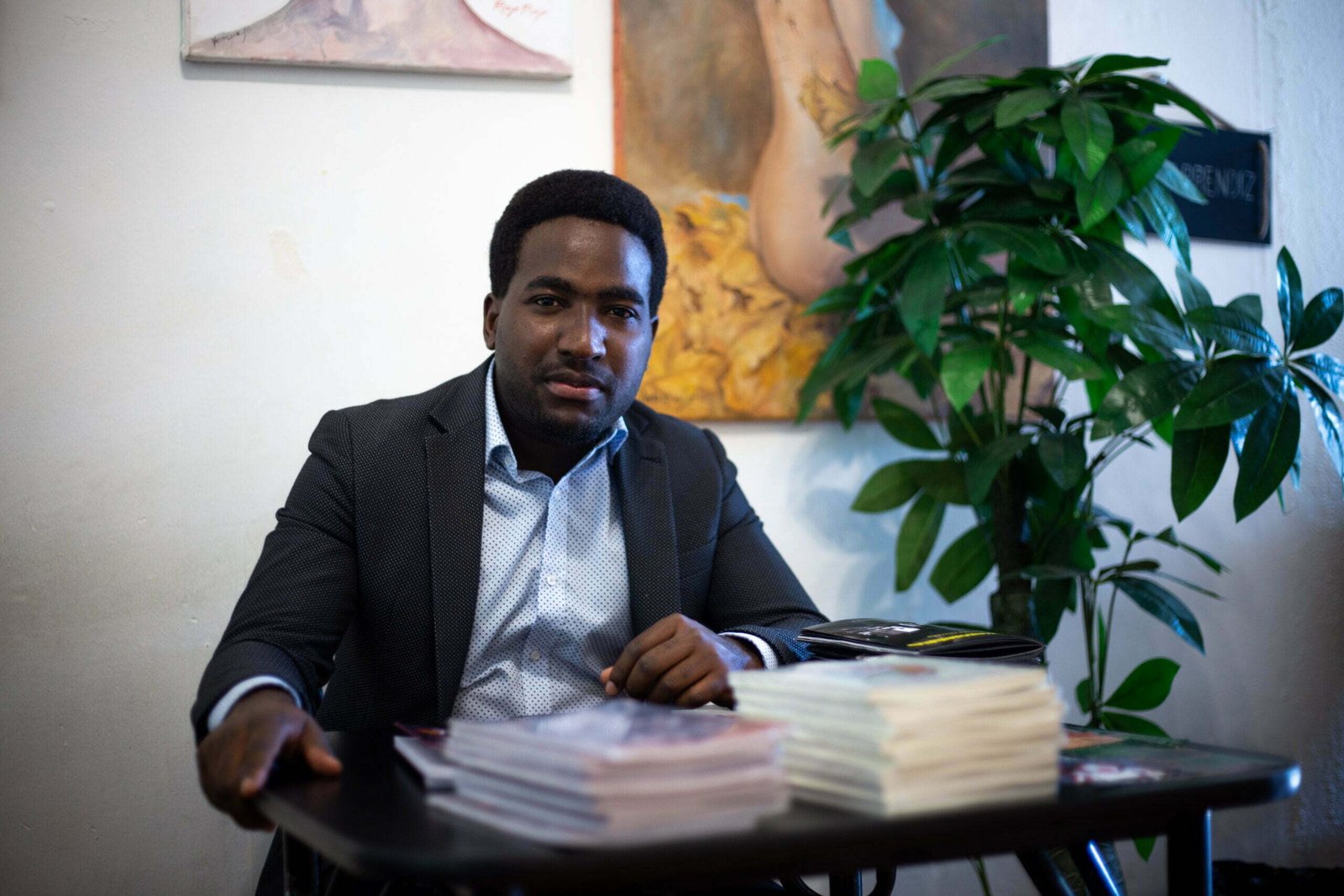
Stevenson Jacques, originally from Haiti, is a professional electrician , theater actor, poet, writer, and art lover, known as "Steve the Poet." I am the founder of "World Writers." For years, I have been publishing on my social media. I have also published in several anthologies, one of which is Champurria. After so many years of sporadic publishing, I decided to publish my first poetry collection, "Tomb Flower," in two languages: Haitian Creole and Spanish, as well as a novel, "Depi Nan Benbo." I plan to publish another novel soon, and much more.
After so many years of sporadic publishing, the poet decided to publish a poetic novel, "Depi Nan Benbo," and his first book of poems, "Flor De Tumba – Flè Kav," in two languages: Haitian Creole and Spanish. It is a book of short poems and free verse.
She plans to publish a novel soon, and much more.